You’ve noticed that catnip and weed share an unmistakably similar earthy, herbal scent, that’s because both plants produce many of the same terpenes, including myrcene and limonene, which comprise 1-3% of their dry weight. However, their active compounds work completely differently: THC binds to CB1 receptors in human brains, while nepetalactone targets feline olfactory pathways exclusively. Understanding the distinct enzymatic processes and receptor mechanisms behind each plant reveals why one affects you and the other drives your cat wild.
Terpenes: Why Catnip and Weed Smell So Similar
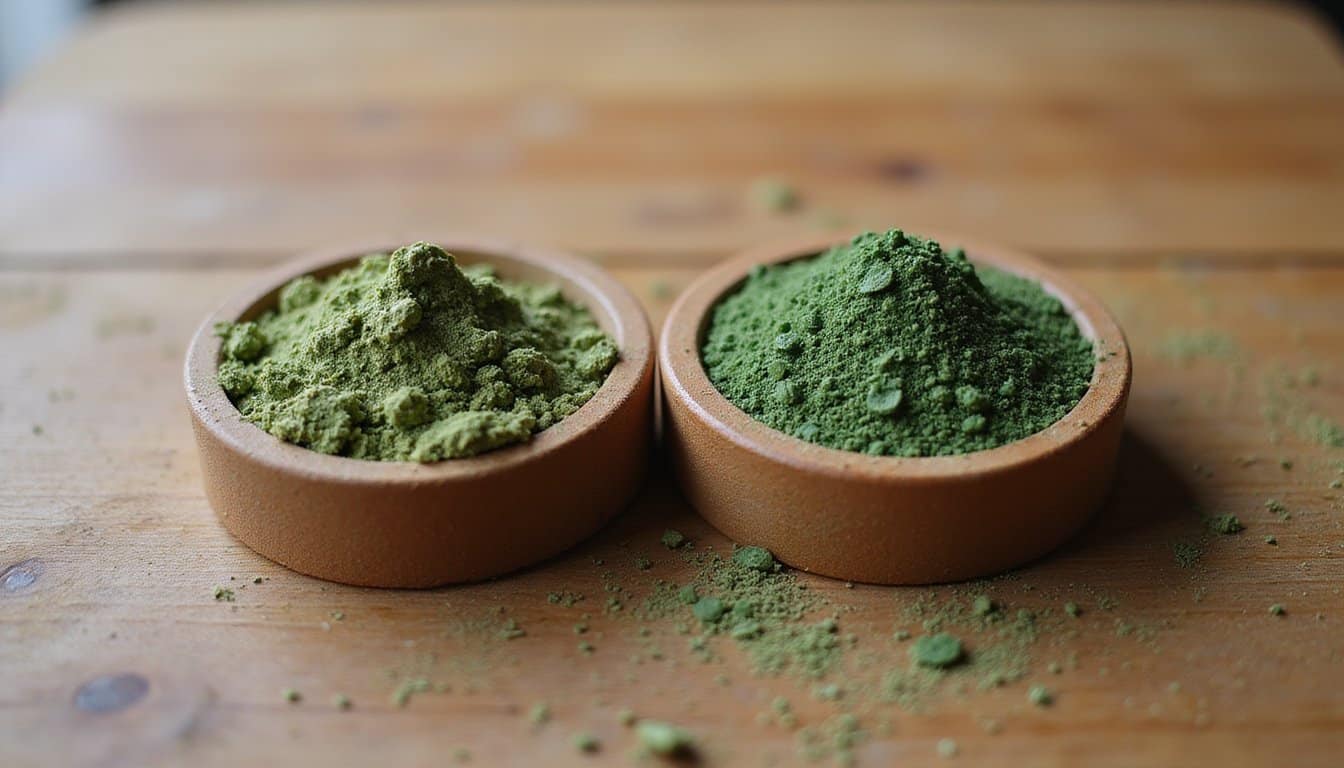
Terpenes are volatile organic compounds responsible for the distinctive aromas and flavors found across the plant kingdom. When you examine cannabis, you’ll find over 150 different terpenes, with 20-30 dominating each strain’s profile at concentrations between 1-3% dry weight.
The overlap between catnip and cannabis aromas stems from shared terpenes. Myrcene, the most abundant in many cannabis strains at 0.5-2% flower weight, creates earthy, musky notes you’ll recognize in both plants. Limonene contributes citrus undertones, while beta-caryophyllene adds woody, peppery characteristics found in black pepper and cloves.
These monoterpenes and sesquiterpenes don’t produce psychoactive effects themselves, THC and CBD remain odorless. Instead, terpenes shape your sensory experience entirely through scent, explaining why two chemically distinct plants can smell remarkably similar. Beyond terpenes alone, cannabis contains aldehydes, esters, and ketones that contribute additional layers to the plant’s full flavor and aroma profile. Research suggests these aromatic compounds work together with cannabinoids through what scientists call the entourage effect, potentially influencing how the body processes and responds to cannabis. Interestingly, studies comparing indoor and outdoor cannabis cultivation have found that outdoor-grown plants produce significantly higher levels of sesquiterpenes like beta-caryophyllene, alpha-humulene, and germacrene B.
Nepetalactone: The Compound Behind Catnip’s Minty Scent
Nepetalactone belongs to the iridoid monoterpene class, featuring a distinctive bicyclic cyclopenta[c]pyran-1-one structure with the molecular formula C10H14O2 and a molecular weight of 166.22 g/mol. You’ll find this compound synthesized through a precise enzymatic cascade where NEPS1 dehydrogenase oxidizes nepetalactol, while NEPS2 and NEPS3 enzymes drive cyclization reactions that generate distinct stereoisomers. The major isomer variations, including the 4aα,7β,7aβ configuration found in *Nepeta nuda*, determine the compound’s volatility profile and its characteristic minty scent in catnip’s essential oil. This volatile compound has a normal boiling point of 548.73 K, contributing to its ability to readily vaporize and reach feline olfactory receptors. The compound is produced in microscopic glands called trichomes on Nepeta plants, where it also serves as an aphid sex pheromone.
Terpene Structure and Classification
The distinctive minty aroma of catnip originates from nepetalactone, a volatile compound with the molecular formula C₁₀H₁₄O₂ and a molecular weight of 166.22 g/mol. You’ll find this compound classified as an iridoid, featuring a bicyclic cis-fused cyclopentane-pyran structure with a six-membered ring containing an oxygen atom.
Nepetalactone’s pharmacokinetic behavior stems from its moderate lipophilicity, demonstrated by an octanol-water partition coefficient (logP) of 2.109. This property allows the compound to dissolve in both polar and nonpolar environments, influencing how it interacts with biological membranes. Beyond its effects on cats, nepetalactone exhibits antibacterial and antifungal properties along with analgesic activity. The compound also demonstrates insect repellent activity, making it useful for pest control applications. Multiple stereoisomers exist, including specific configurations like (4aS,7S,7aR)-4,7-dimethyl variants. Two methyl groups positioned at carbons 4 and 7 define the molecule’s three-dimensional geometry, directly affecting receptor binding specificity in feline olfactory systems.
Enzymatic Production Process
Within microscopic glandular trichomes dotting the underside of catnip leaves, specialized enzymes orchestrate nepetalactone’s biosynthesis through a distinctive two-step cascade. Unlike peppermint’s single-enzyme terpene formation, catnip employs an uncoupled activation and cyclization mechanism. The first enzyme activates a precursor molecule, while the second enzyme cyclizes it into nepetalactone’s characteristic bicyclic structure. This unique process involves three new enzymes with unusual activity that researchers had not previously observed in the production of other plant-derived chemicals. Specifically, the first enzyme converts the linear 8-oxogeranial into an enolate, while a repurposed dehydrogenase then forms the two rings that give nepetalactone its structure.
When comparing catnip vs weed, you’ll find this enzymatic production process creates compounds with fundamentally different pharmacokinetic profiles. Researchers have isolated genes from nepetalactone-producing glands and transferred them to E. coli for detailed enzyme characterization. This work has enabled semi-biosynthetic production in yeast strains, where the NEPS1 cyclase/oxidase drives a four-step enzymatic pathway yielding 26 mg/L nepetalactone. Through factorial design and response surface methodology, scientists achieved a 5.8-fold increase in nepetalactone titer to 153 mg/L. Such microbial systems offer alternatives to traditional steam distillation, which extracts only 0.3% volatile oil by weight from harvested plants.
Major Isomer Variations
Catnip’s signature compound branches out into several distinct stereoisomers, each with the same C10H14O2 formula but different three-dimensional arrangements around its bicyclic cyclopenta[c]pyran-1(4aH)-one core.
You’ll find the primary form under CAS 490-10-8, while the (4aS,7S,7aR)-trans isomer carries CAS 21651-62-7. The (Z,E)-nepetalactone represents the cis-trans configuration, with specific [4aS-(4aα,7α,7aα)] arrangements documented across multiple iridoid analog stereoisomers.
These structural variations explain why catnip smell like weed to some observers, both plants produce aromatic terpene-related compounds. However, unlike cannabinoids that bind directly to brain receptors, nepetalactone targets feline olfactory pathways exclusively. When comparing THC vs nepetalactone, you’re examining fundamentally different molecular architectures with species-specific pharmacokinetic profiles that produce vastly different physiological responses.
THC and Terpenes: What Gives Cannabis Its Skunky Smell?
When you examine cannabis chemistry, THC (delta-9-tetrahydrocannabinol) stands out as the primary psychoactive compound that binds directly to CB1 receptors in your brain, a mechanism entirely absent in catnip. While terpenes like myrcene and limonene contribute citrus, pine, and earthy notes to cannabis aroma profiles, recent research reveals they aren’t responsible for the signature skunk smell. Instead, volatile sulfur compounds, particularly 3-methyl-2-butene-1-thiol (321MBT), drive that intense skunky pungency you detect at parts-per-trillion concentrations. This same compound is notably one of seven thiols found in actual skunk spray, explaining why our noses evolved to detect it even at extremely low concentrations. Scientists have also identified minor nonterpenoid volatiles like 3-mercaptohexyl derivatives that contribute fruity and tropical aromas to certain cannabis varieties. The intensity of this skunk-like aroma varies significantly between strains due to different terpene profiles and genetic makeup.
THC’s Psychoactive Chemistry
For decades, cannabis enthusiasts and researchers alike attributed the plant’s distinctive skunky smell to terpenes like myrcene or β-caryophyllene, but 2021 studies from Koziel’s and Oswald’s research teams overturned this assumption entirely. Notably, Koziel’s team disclosed this connection first in March and April 2021, preceding Oswald’s publication on the subject.
The true culprit is 3-methyl-2-butene-1-thiol (321MBT), a volatile sulfur compound that dominates cannabis’s pungent profile despite appearing in trace amounts. This cannabis comparison matters when you’re examining herbal plant differences because catnip lacks these sulfur compounds entirely. The chemical similarity between cannabis VSCs and skunk spray’s primary compound, 3-methyl-1-butanethiol, explains why both share that unmistakable pungent odor that can lead to unexpected associations. These volatile sulfur compounds are highly unstable, evaporating over time even when the flower is stored in sealed containers.
When asking if catnip has THC, you’ll find the answer is definitely no. THC’s psychoactive chemistry depends on cannabinoid receptors in your brain, receptors that catnip’s nepetalactone doesn’t engage. While VSCs create cannabis’s skunky overlay and terpenes provide earthy bases, neither compound class produces intoxication without THC’s direct neurological interaction.
Terpenes Create Distinct Aromas
How do terpenes and sulfur compounds interact to produce cannabis’s distinctive skunky profile? You’ll find over 200 terpenes concentrated in trichomes, with myrcene, beta-caryophyllene, and pinene dominating the aromatic signature. Myrcene delivers earthy, musky notes, while beta-caryophyllene adds spicy, peppery undertones.
However, 2021 research corrected a longstanding misattribution. Scientists identified volatile sulfur compounds, specifically 3-methyl-2-butene-1-thiol (321MBT), as the true source of that pungent skunk smell. These VSCs share structural similarities with compounds in actual skunk spray, garlic, and hops.
Your perception of cannabis’s aroma depends on genetic factors, soil quality, and harvest timing. Sulfur compounds peak at flower maturity and during curing, though they’re present in low concentrations. Despite their scarcity, VSCs dominate the scent profile, overpowering terpene contributions in particularly pungent cultivars.
What Makes Cats Go Crazy for Catnip?
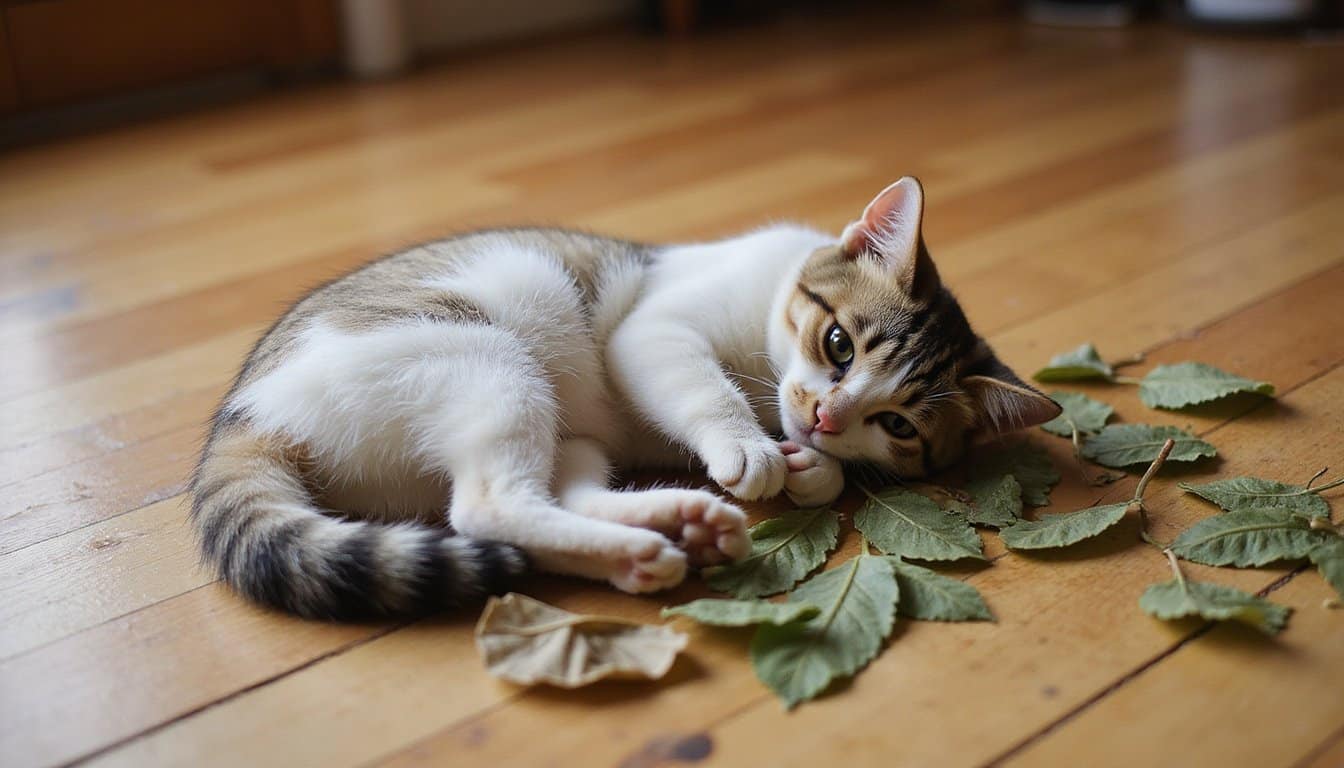
The compound activates your cat’s opioid system, elevating beta-endorphins similar to morphine’s mechanism. This produces a 10-15 minute euphoric state characterized by rolling, rubbing, chewing, drooling, and vocalizing. Cats with blocked opioid systems show no rubbing behavior, confirming this pathway.
Not every cat responds, hereditary factors affect 50-80% of the feline population, while kittens remain unresponsive until approximately six months old. Ingested catnip acts as a sedative rather than stimulant.
Why Cats Don’t Get High From Weed (And Shouldn’t)
Unlike humans, cats metabolize THC through an entirely different biochemical pathway that fundamentally changes how cannabis affects their bodies. Cats primarily convert THC via 8-hydroxylation, producing 8-OH-THC rather than the psychoactive 11-OH-THC that humans generate. This metabolic difference doesn’t protect them, it actually increases danger.
| Factor | Cats vs. Humans |
|---|---|
| Primary THC metabolite | 8-OH-THC vs. 11-OH-THC |
| Toxic dose threshold | ≥0.2 mg/kg |
| Peak effect onset | 30 minutes to hours |
| Clinical signs | Ataxia, vomiting, urinary dribbling |
| Body size impact | Amplified toxicity |
Your cat’s smaller body size means THC accumulates rapidly, binding to abundant cannabinoid receptors throughout their system. Even minimal secondhand smoke exposure poses genuine risks. Cannabis isn’t recreational for cats, it’s genuinely toxic.
How THC Affects Human Brains Differently

When THC enters your bloodstream, it crosses the blood-brain barrier and binds directly to CB1 receptors concentrated in regions governing memory, cognition, and reward processing. This interaction triggers dopamine release, creating the characteristic high that motivates continued use.
Your brain responds measurably to cannabis exposure. Heavy users show 63% reduced brain activity during working memory tasks, affecting the dorsolateral prefrontal cortex, dorsomedial prefrontal cortex, and anterior insula. You’ll notice impaired ability to retain information and solve problems requiring mental manipulation.
Short-term cognitive effects, particularly episodic verbal memory decline, may resolve after 72 hours of abstinence. However, frequent use alters neural activation across multiple domains, memory, executive function, emotion, and reward processing. If you’re young, you’re especially vulnerable since your brain’s still developing.
How Catnip and Cannabis Build Their Compounds
Both catnip and cannabis manufacture their signature compounds through terpene-based pathways, yet their biochemical machinery diverges at critical steps. When you examine catnip’s nepetalactone synthesis, you’ll find an unusual two-step pathway. The precursor 8-oxogeranial undergoes reduction before cyclization, with NEPS enzymes converting nepetalactol to the final nepetalactone product in leaf trichomes.
Cannabis takes a different route. Its terpene synthases act directly on geranyl pyrophosphate precursors, cyclizing cationic intermediates without the prior reduction step catnip requires. This pathway produces monoterpenes like limonene alongside cannabinoids.
Both plants concentrate production in trichome glands, explaining their aromatic potency. However, catnip’s iridoid ring structure differs fundamentally from cannabis’s cannabinoid architecture. These distinct biochemical endpoints determine why nepetalactone affects cats while THC targets your endocannabinoid system.
Is Catnip Safer for Pets Than Cannabis?
Though catnip and cannabis both trigger behavioral changes in cats, their safety profiles couldn’t be more different. Catnip poses virtually no risk, it’s non-addictive, can’t cause fatal overdose, and produces effects lasting only 10-15 minutes. If your cat overeats it, you’ll see mild GI distress at worst. Though catnip and cannabis both trigger behavioral changes in cats, their safety profiles couldn’t be more different. Catnip poses virtually no risk, it’s non-addictive, cannot cause a fatal overdose, and its effects typically last only 10, 15 minutes, with mild GI distress at worst if overeaten. While some people are curious about catnip effects humans, it does not produce the same psychoactive impact in humans as it does in cats, making it far less concerning from a safety standpoint. Though catnip and cannabis both trigger behavioral changes in cats, their safety profiles couldn’t be more different. Catnip poses virtually no risk, it’s non-addictive, cannot cause a fatal overdose, and its effects typically last only 10, 15 minutes, with mild GI distress at worst if overeaten. While some people are curious about catnip effects in humans and what happens if human smoke catnip, it does not produce the same psychoactive impact in humans as it does in cats, making it far less concerning from a safety standpoint.
Cannabis presents serious dangers to felines. Your cat’s liver can’t efficiently metabolize THC, leading to toxicity that persists 24-72 hours. Even tiny amounts of concentrates require immediate veterinary intervention, with treatment costs averaging $300-$1,000 and reaching $8,000 in severe cases.
You can safely offer catnip multiple times daily, spending roughly $20-$30 yearly. If you’re seeking calming alternatives, hemp-derived CBD containing under 0.3% THC offers a safer option than cannabis while providing potential wellness benefits.
Same Smell, Different Receptors: The Real Distinction
Despite sharing aromatic compounds that trick your nose into detecting similar scents, catnip and cannabis activate completely different biological pathways. Nepetalactone, catnip’s primary terpene, targets feline olfactory bulb receptors exclusively. THC binds to CB1 and CB2 endocannabinoid receptors present across mammalian species. Despite sharing aromatic compounds that can trick your nose into detecting similar scents, catnip and cannabis activate entirely different biological pathways. Nepetalactone, catnip’s primary terpene, specifically targets receptors in the feline olfactory bulb, while THC binds to CB1 and CB2 endocannabinoid receptors found across mammalian species. This distinction explains why does catnip get a human high is a common question, yet in reality, catnip does not produce the same psychoactive effects in humans as cannabis.
You won’t experience cross-reactivity between these compounds. Nepetalactone requires active sniffing and stimulates olfactory neurons directly, producing effects lasting 5-15 minutes in cats. THC enters your system through various absorption routes, interacting with CYP3A4 and CYP2C9 enzymes during metabolism.
The distinction matters pharmacokinetically. Cannabis terpenes like trans-caryophyllene and β-myrcene create aromatic profiles resembling catnip’s scent, but they’re chemically distinct from nepetalactone. Your olfactory system detects similar volatile oils, yet the downstream receptor interactions determine vastly different physiological outcomes between species.
Take the First Step Today
Experimenting with unconventional substances can sometimes signal a deeper struggle with addiction. Getting help sooner rather than later can change the entire course of recovery. At The Hope Institute, we provide trusted Addiction Treatment and a flexible Intensive Outpatient Program (IOP) to help you get ahead of the problem before it grows. Call (855) 659-2310 today and take the first step toward a healthier life.
Frequently Asked Questions
Can Humans Get High From Smoking or Eating Catnip?
No, you won’t get high from smoking or eating catnip. Your body lacks the specific olfactory-limbic receptor pathway that makes cats respond euphorically to nepetalactone. When you consume catnip, it interacts with your GABA receptors instead, producing mild sedative effects rather than euphoria. If you smoke it, you’ll likely experience lightheadedness from oxygen deprivation, not psychoactive effects. Catnip simply doesn’t contain cannabinoids or compounds that alter human consciousness.
Why Do Some Cats Not Respond to Catnip at All?
Your cat’s response to catnip depends entirely on genetics. Approximately one-third of cats inherit a recessive trait that prevents their olfactory receptors from binding effectively with nepetalactone. Without this binding, the downstream opioid pathway activation that produces euphoria simply doesn’t occur. You’ll also notice kittens under 6-8 weeks won’t respond, their olfactory systems haven’t matured yet. Repeated exposure won’t change a non-responder’s sensitivity; it’s hardwired into their DNA.
Is Silver Vine a Stronger Alternative to Catnip for Cats?
Yes, silvervine offers you a stronger alternative to catnip for your cat. It contains multiple active compounds, actinidine and dihydroactinidiolide, compared to catnip’s single nepetalactone, creating more potent stimulation. You’ll find that 80% of cats respond to silvervine versus 68-70% to catnip. Even better, 75% of cats who don’t respond to catnip will react to silvervine, making it particularly valuable if your cat seems immune to catnip’s effects.
Can Catnip Be Used as a Natural Insect Repellent?
Yes, you can use catnip as a highly effective natural insect repellent. Nepetalactone, catnip’s active compound, directly activates the TRPA1 receptor in mosquitoes and flies, triggering an aversion response. Studies show it’s up to 10 times more effective than DEET. Here’s the key: catnip doesn’t activate human TRPA1, so you won’t experience any irritation. You’ll need less catnip oil than standard DEET formulations to achieve equal repellency.
At What Age Do Kittens Start Responding to Catnip?
Your kitten will typically start responding to catnip between 3 to 6 months of age. Before this window, their neural pathways haven’t matured enough to process nepetalactone, the compound that triggers the response. The olfactory receptors responsible for detecting catnip don’t become fully functional until around 3 months. You’ll notice this trait affects only 50-75% of cats due to hereditary factors, so don’t worry if your kitten shows no reaction.