When you drink alcohol while trying to detox from THC, you’re actually making the process harder on your body. Alcohol competes directly with THC for liver enzyme processing, which can raise your blood THC levels by up to 30%. Your liver’s CYP enzymes become overwhelmed, slowing THC metabolism considerably. Chronic alcohol use also suppresses the enzymes needed to break down THC stored in fat cells. Understanding the specific mechanisms behind this interaction can help you develop a more effective clearance strategy.
Will Drinking Help You Pass a THC Drug Test?

Although you might hear claims that alcohol can flush THC from your system before a drug test, the science tells a different story. Alcohol actually raises blood THC levels by up to 30%, directly undermining blood THC levels clearance. Your liver metabolism THC processing becomes compromised because CYP450 enzymes prioritize breaking down alcohol first.
THC stored in fat cells doesn’t release faster with alcohol consumption. Instead, fat cells THC release timing remains unchanged while metabolic competition extends detection windows. Chronic cannabis users may experience even slower THC elimination due to accumulation in fat cells over time. For urine drug tests, this creates significant problems, alcohol offers no urine drug test THC clearance impact benefits.
Additionally, modern specimen validity tests detect dilution attempts. Specimen validity urine drug tests identify adulteration, meaning alcohol won’t help you cheat the system. Evidence confirms advance detox programs, not alcohol, represent your best approach. Health professionals recommend avoiding alcohol for 24-48 hours before any drug test to ensure accurate results and prevent complications with substance detection.
Why Alcohol Actually Raises THC Levels in Your Blood
When you consume alcohol before using cannabis, your blood THC levels rise markedly higher than they would from cannabis alone. Research shows median maximum THC jumps from 42.2 µg/L to 67.5 µg/L with high-dose cannabis when alcohol is involved. This occurs because ethanol enhances absorption of cannabis compounds into your bloodstream, intensifying effects on brain chemistry and cannabinoid receptors.
- Your liver metabolism becomes overwhelmed processing both substances simultaneously
- Cognitive impairment increases considerably, raising accident risk
- Withdrawal symptoms may intensify for those with alcohol use disorders
- Studies confirm that mixing both substances leads to significantly more driving errors than using either drug independently
For individuals with dual diagnosis concerns, this interaction complicates medical detox protocols. The amplified 11-OH-THC levels, rising from 5.0 µg/L to 6.0 µg/L, explain why harm reduction strategies emphasize avoiding this combination during THC clearance efforts. This cannabis-alcohol combination is one of the most frequently detected drug pairings found in motor vehicle fatalities. In the study, alcohol was administered 10 minutes before cannabis inhalation to measure how timing affects blood concentration levels.
How Alcohol Slows Your Body’s THC Metabolism

Beyond the immediate spike in blood THC concentrations, alcohol creates a secondary problem: it actively competes with THC for your liver’s metabolic resources. When you drink, your liver prioritizes ethanol clearance, forcing THC to wait. This alcohol interference directly impacts your detoxification system, extending how long cannabinoids circulate in your bloodstream.
Beyond the immediate spike in blood THC concentrations, alcohol creates a secondary problem that answers the question Will Alcohol Affect THC Detox: it actively competes with THC for your liver’s metabolic resources. When you drink, your liver prioritizes ethanol clearance, forcing THC to wait. This alcohol interference directly impacts your detoxification system, extending how long cannabinoids circulate in your bloodstream.
| Factor | Impact on THC Metabolism |
|---|---|
| Liver function | Reduced processing capacity |
| Glutathione depletion | Decreased antioxidant protection |
| Oxidative stress | Increased cellular damage |
| Metabolic support | Compromised energy production |
| Withdrawal symptoms | Intensified during combined detox |
Your cannabinoid system clearance depends heavily on cytochrome P450 enzymes. Heavy cannabis use combined with alcohol addiction compounds hepatic strain, making recovery longer and more challenging. This combination also creates a higher risk of dependence on one or both substances, further complicating the detoxification process. Research shows that when THC and ethanol are used together, they can have deleterious effects on mitochondria, which further compromises your body’s ability to process and eliminate these substances efficiently. For those struggling with combined use, a medically-supervised detox in a safe, supportive setting can help manage the extended timeline and ensure both substances are cleared safely from the body.
The Fat Storage Problem: Why THC Lingers Longer With Alcohol
Your body’s fat cells don’t just store energy, they act as long-term reservoirs for THC, creating a detox challenge that alcohol directly worsens. Because THC is fat-soluble, it accumulates in adipose tissue and releases gradually through lipolysis. When you drink alcohol, your liver enzymes prioritize alcohol metabolism, reducing their capacity to process THC efficiently. This disruption alters your pharmacokinetic profile, causing blood THC levels to remain heightened longer.
Research shows that chronic alcohol use suppresses the enzymes needed for THC breakdown, meaning adipocyte THC mobilizes into your bloodstream without adequate metabolic clearance. Your individual metabolic rate and body composition determine how severely fat metabolism complications affect you. Studies demonstrate that food deprivation promotes lipolysis through sympathetic nervous system activation, which can unexpectedly release stored THC back into circulation. Additionally, genetic variants of certain enzymes may influence how quickly your body can eliminate THC even when alcohol isn’t a factor. Beyond immediate metabolic effects, co-use of alcohol and cannabis has been associated with persistent deficits in cognitive function and adverse psychosocial outcomes that compound detox challenges.
- Higher body fat percentages mean more THC storage capacity
- Alcohol consumption directly impairs your liver’s THC processing ability
- Stress-induced lipolysis can unexpectedly spike your blood THC levels
Skip the Booze: Proven Ways to Speed Up THC Clearance
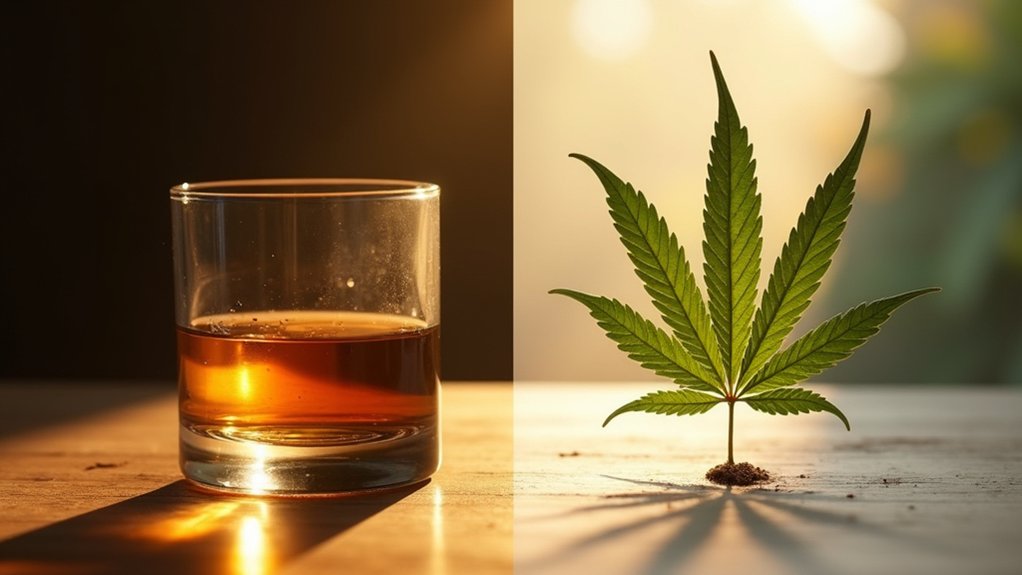
Because alcohol directly competes with THC for liver enzyme processing, eliminating it from your routine becomes the single most impactful step you can take to accelerate cannabinoid clearance. Cannabis users who stop vaping cannabis compounds while simultaneously avoiding alcohol allow their liver metabolism alcohol interference to resolve naturally, restoring paramount CYP enzyme function.
Lifestyle strategies liver recovery depends upon include consistent hydration, high-fiber nutrition, and cardiovascular exercise that mobilizes THC from fat stores. Research demonstrates that THC detection can persist up to 22 days after abstinence initiation in chronic daily cannabis users, making consistent detoxification efforts essential. For those experiencing withdrawal symptoms THC overlap with alcohol withdrawal symptoms, cognitive behavioral therapy provides structured support without adding hepatic burden. The high comorbidity between AUD and CUD during adolescence makes addressing both substances simultaneously essential for effective detoxification outcomes.
Supporting liver function with milk thistle and dandelion root supplements may provide additional detoxification benefits during the recovery process. If you’ve struggled with alcohol use disorders metabolic effects, professional alcohol detox guarantees your brain’s prefrontal cortex and liver recover simultaneously, creating ideal conditions for complete THC elimination.
Frequently Asked Questions
Can Alcohol Withdrawal Symptoms Worsen THC Detox Side Effects?
Yes, alcohol withdrawal symptoms can worsen THC detox side effects. When you’re withdrawing from alcohol, your brain experiences GABA reductions in key regions like the prefrontal cortex and amygdala, intensifying anxiety and mood instability. Since THC detox already involves irritability, sleep disruption, and cognitive difficulties, overlapping withdrawal states compound these symptoms considerably. You’ll likely experience heightened discomfort, making professional medical supervision essential to manage both processes safely and effectively.
How Long Should I Avoid Alcohol After Stopping Cannabis Use?
You should avoid alcohol for at least two to four weeks after stopping cannabis use to give your liver time to clear THC metabolites without enzymatic competition. If you’ve used cannabis heavily or have higher body fat, extending this window to six weeks or longer supports more efficient detox. Staying alcohol-free reduces hepatic strain, prevents metabolic delays, and helps your body restore balance more predictably during recovery.
Does Beer Affect THC Clearance Differently Than Hard Liquor?
No, beer doesn’t affect THC clearance differently than hard liquor. What matters is the total alcohol content reaching your bloodstream, not the beverage type. Whether you’re drinking beer, wine, or spirits, the ethanol competes for the same liver enzymes needed to process THC metabolites. Your liver prioritizes alcohol breakdown regardless of its source, so any alcoholic drink can delay THC clearance proportionally to how much you consume.
Can One Drink Delay My THC Detox Timeline Significantly?
Yes, even one drink can delay your THC detox timeline. Research shows a single alcohol dose substantially raises THC blood levels by increasing absorption and competing for liver enzymes needed to process cannabinoids. This interference slows metabolism, extends how long THC-COOH remains detectable, and causes dehydration that further hinders clearance. While the delay varies by individual factors, there’s no evidence supporting alcohol as beneficial during detox, it consistently works against your goals.
What Liver Warning Signs Should I Watch for During Detox?
Watch for yellowing of your skin or eyes (jaundice), unusually dark urine, persistent nausea or vomiting, severe abdominal pain (especially in the upper right area), extreme fatigue, and unusual confusion. These signs indicate your liver may be under significant stress. If you notice any of these symptoms during detox, don’t wait, contact a healthcare provider immediately for proper assessment. Early intervention protects your liver and supports safer recovery.