In an emergency alcohol overdose, you’ll receive immediate medical assessment of crucial signs and consciousness levels. Medical staff will secure your airway, monitor breathing, and may perform intubation if necessary. You’ll get IV fluids to combat dehydration, along with thiamine and other essential nutrients. Treatment includes careful administration of medications like benzodiazepines while monitoring your response. Understanding the complete protocol helps you recognize the important steps in emergency alcohol overdose care.
Initial Medical Assessment and Stabilization

Four critical components comprise the initial medical evaluation and stabilization of alcohol overdose patients. During the initial evaluation, medical staff will evaluate your consciousness level using the Glasgow Coma Scale while monitoring your essential signs, including heart rate, blood pressure, and respiratory function. They’ll also document your current alcohol consumption details and gather information about previous drinking patterns. Medical staff must also consider that patients may have consumed multiple substances, as concurrent use of alcohol with other drugs can significantly complicate the clinical presentation and treatment approach. Security protocols are strictly followed during emergency treatment to protect patient data and medical systems. If blood alcohol levels exceed 350 mg/100 ml, patients typically require admission to high-dependency units for close monitoring.
Risk identification includes evaluating you for high-risk behaviors performed while intoxicated and examining for potential medical complications. Your physical examination will include ophthalmoscopy to check for increased intracranial pressure, particularly if you’re unresponsive. Staff will examine your eye movements, muscle strength, and look for any physical injuries. They’ll also conduct immediate blood and urine tests to determine your intoxication severity and screen for metabolic complications.
Critical Life Support and Airway Management
During severe alcohol overdose, effective airway management becomes the cornerstone of critical life support interventions. Medical teams will immediately assess your airway status and implement protective measures to prevent respiratory complications. Airway protection protocols guarantee your breathing passages remain clear while oxygen therapy supports adequate blood oxygen levels. Research shows only 2.3% of patients require emergency intubation during alcohol intoxication cases. Healthcare providers carefully monitor for irregular breathing patterns, as patients experiencing alcohol poisoning often have fewer than eight breaths per minute. Medical staff will also administer IV fluids to combat severe dehydration that often accompanies alcohol poisoning.
Swift airway management and protective protocols are essential first steps for medical teams treating severe alcohol overdose patients.
Your respiratory management plan includes:
- Continuous monitoring of blood oxygen saturation and breathing patterns
- Positioning techniques to maintain an open airway and prevent obstruction
- Emergency intubation if your Glasgow Coma Scale falls below 9
You’ll receive specialized ventilatory support if needed, ranging from basic rescue breathing to mechanical ventilation. The medical team focuses on preventing respiratory depression – a primary cause of death in severe alcohol intoxication. They’ll maintain this intensive monitoring until your body safely metabolizes the alcohol.
Fluid Replacement and Nutritional Therapy
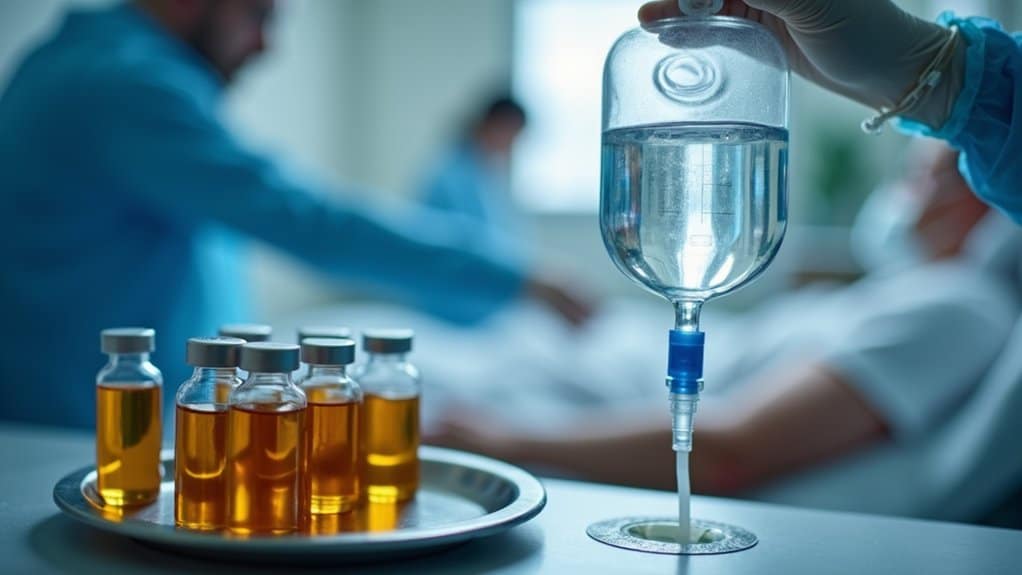
Effective fluid replacement and nutritional support form the foundation of alcohol overdose treatment. When you’re admitted for alcohol poisoning, you’ll receive intravenous saline solution as the primary hydration strategy. Medical staff will assess your dehydration level by checking physical signs like dry mucous membranes and monitoring your urine output. Research shows that routine IV fluids may not actually speed up the time it takes to recover from acute alcohol intoxication. Studies demonstrate that saline treatment results in higher hospital costs without significantly reducing emergency department stay times.
Your treatment will include careful electrolyte management, as alcohol disrupts your body’s normal balance of sodium, potassium, and magnesium. You’ll receive specialized IV fluids based on your specific deficiencies. If you’re showing signs of low blood sugar, you’ll get 5% dextrose solution to prevent complications. Throughout your treatment, medical staff will continuously monitor your crucial signs, consciousness level, and response to fluid therapy to guarantee you’re reaching stable hydration status before discharge.
Essential Medication and Vitamin Protocols
Proper medication and vitamin protocols play an essential role in treating alcohol overdose emergencies. You’ll receive thiamine administration before any glucose management to prevent serious neurological complications. Healthcare providers will carefully monitor your response while following strict benzodiazepine protocols to manage withdrawal symptoms.
Essential treatment components include:
- At least 250mg of intramuscular thiamine daily for 3-5 days, followed by 100mg oral supplementation
- Carefully timed 5% dextrose administration for hypoglycemia correction after thiamine treatment
- Fixed-dose benzodiazepine regimens starting with high doses (such as diazepam 40mg daily) and tapering by 25% after day three
Your treatment may include additional vitamin supplementation if you show signs of malnutrition or chronic alcohol use. Throughout treatment, you’ll undergo continuous monitoring to guarantee medication safety and prevent complications. Since alcohol overdose disproportionately affects certain populations, healthcare providers deliver person-centered care that addresses individual needs while maintaining dignity.
Ongoing Monitoring and Recovery Care

Successful treatment of alcohol overdose requires thorough monitoring protocols and structured recovery care plans. Medical teams focus on essential signs, neurological monitoring, and respiratory management while evaluating metabolic parameters every 4 hours. Continuous observation in a high-dependency setting guarantees early detection of complications. Quick response teams must be notified immediately to facilitate appropriate emergency care and treatment.
| Monitoring Type | Key Parameters | Critical Values |
|---|---|---|
| Essential Signs | HR, BP, RR | Every hour |
| Neurological | GCS, pupils | Every 2 hours |
| Metabolic | Glucose, electrolytes | Every 4 hours |
Recovery planning involves systematic evaluation of admission criteria and discharge readiness. Healthcare providers maintain strict airway protection protocols while monitoring for physical injuries and neurological deficits. The treatment team conducts thorough substance use assessments and arranges appropriate follow-up care before discontinuing intensive monitoring.
Frequently Asked Questions
How Long Does Alcohol Poisoning Treatment Typically Last in the Emergency Room?
You’ll typically receive emergency protocols for alcohol poisoning treatment for about 24 hours, though treatment duration varies based on your blood alcohol concentration and symptoms’ severity. If you’re admitted with severe intoxication, you’ll need continuous monitoring in a high-dependency unit until your essential signs stabilize. For critical cases, you might require extended care beyond 24 hours, especially if complications arise or you need hemodialysis.
Can Family Members Stay With Patients During Alcohol Poisoning Treatment?
While policies vary by hospital, you’ll typically find that family support is allowed during alcohol poisoning treatment, though there may be temporary restrictions during critical interventions. Your patient rights usually include having a family member present, but medical staff might limit access during certain procedures or if the patient is combative. You should check with the specific emergency department’s visitation policies, as they can differ based on the facility’s protocols.
What Are the Long-Term Effects of Surviving Multiple Alcohol Overdoses?
If you survive multiple alcohol overdoses, you’ll face severe long-term consequences. Your brain will suffer permanent cognitive impairment from repeated oxygen deprivation, affecting memory and decision-making. You’ll likely develop emotional instability and mood disorders. Your major organs, liver, heart, kidneys, and pancreas, will progressively deteriorate. You’ll also experience weakened immunity, increased cancer risks, and chronic digestive problems. Social relationships and employment stability often collapse as well.
Does Insurance Typically Cover Emergency Treatment for Alcohol Overdose?
Yes, your insurance policies will typically cover emergency treatment for alcohol overdose. Since it’s considered a life-threatening condition, most health plans include this under their emergency coverage provisions, even if you receive care at an out-of-network facility. You won’t need prior authorization, and your insurance will generally cover essential services like emergency department visits, hospital admission, intensive care, medications, and monitoring. Standard copays and deductibles still apply.
When Is It Safe to Discharge a Patient After Alcohol Poisoning?
You’ll be considered safe for discharge once you meet several key patient assessment criteria: you must be fully alert and oriented to your surroundings, able to walk steadily without help, and maintain a coherent conversation. Your essential signs should be stable, and you’ll need to keep fluids down without vomiting. The medical team won’t discharge you if you show signs of withdrawal, have serious medical complications, or lack adequate support at home.