Assess your pneumonia severity using the CRB-65 score, which evaluates confusion, respiratory rate, blood pressure, and age. If you’re low-risk (score 0-1), you’ll likely qualify for outpatient treatment. Start appropriate antibiotics based on your health status either monotherapy with amoxicillin/doxycycline for healthy patients or combination therapy if you have comorbidities. Monitor your temperature, heart rate, and breathing while completing the full antibiotic course. Your success depends on understanding the complete management approach.
Assessing Patient Risk With CRB-65 Scoring

Four key components comprise the CRB-65 scoring system, a validated tool for evaluating pneumonia severity and mortality risk in outpatient settings. You’ll assess confusion through mental status testing, check if respiratory rate exceeds 30 breaths/minute, evaluate blood pressure for systolic ≤90 mmHg or diastolic ≤60 mmHg, and note if the patient is 65 or older. Patient outcomes can be significantly improved through early severity assessment and appropriate triage decisions. The system provides structured assessment guidelines to enhance clinical decision-making.
In CRB-65 interpretation, each component contributes one point toward a total score of 0-5. Your risk factor evaluation correlates directly with mortality rates: scores of 0-1 indicate low risk (1-3% mortality), 2 suggests moderate risk (8% mortality), and 3-5 represent high to severe risk (20-30% mortality). These scores guide your treatment decisions, helping determine whether outpatient care is appropriate or hospital admission is necessary. For additional confidence in your assessment, consider utilizing MDCalc’s evidence-based tools to verify your calculations.
Key Criteria for Outpatient Management
Building upon risk assessment tools like CRB-65, determining outpatient management eligibility requires a thorough evaluation using the Pneumonia Severity Index (PSI). You’ll need to assess multiple factors, including age, comorbidities, essential signs, and laboratory values, with special attention to the absence of pleural effusion. Initial antibiotic treatment with amoxicillin or doxycycline is preferred for low-risk patients. Macrolide monotherapy may be conditionally used in areas where resistance rates are below 25%.
For outpatient eligibility criteria, you must confirm essential sign stability (temperature <40°C, respiratory rate <30), normal sodium levels (≥130 mmol/L), and BUN <30 mg/dL. Clinical judgment importance can’t be overstated even with favorable PSI scores, you’ll need to evaluate the patient’s functional independence, oral intake adequacy, and access to follow-up care. Patients with scores of 0-1 on CURB-65 can typically be managed safely as outpatients. Consider implementing EHR-based predictive tools to standardize your assessment, but don’t rely solely on automated scores. Remote monitoring systems can help you track recovery metrics post-discharge.
Selecting Appropriate Antibiotic Therapy
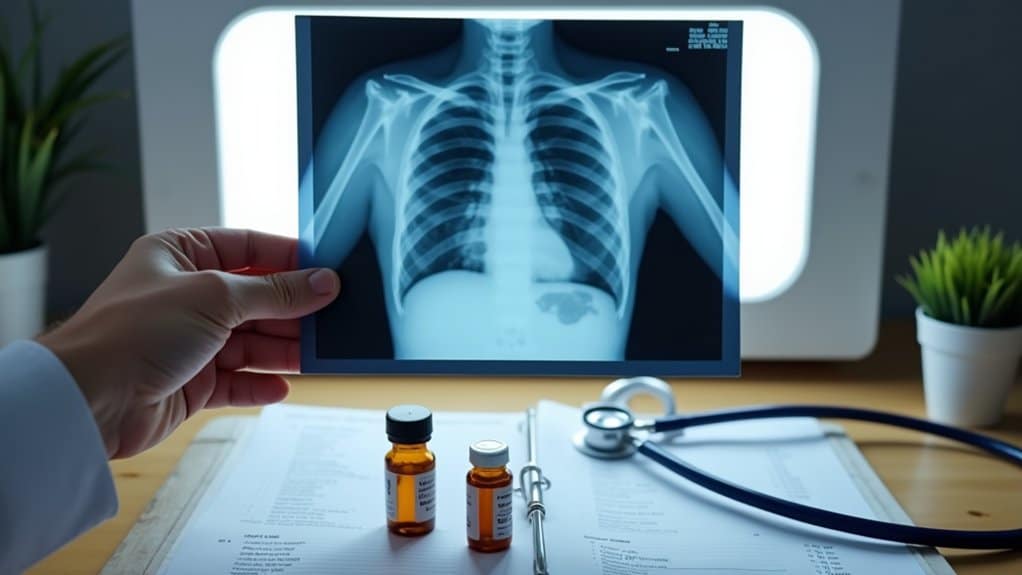
When selecting empiric antibiotic therapy for outpatient pneumonia, you’ll need to stratify patients based on their risk factors and local resistance patterns. For healthy patients without recent antibiotic exposure, start with monotherapy using amoxicillin, doxycycline, or a macrolide. However, if local pneumococcal macrolide resistance exceeds 25%, avoid macrolide monotherapy. These treatment choices align with evidence-based guidelines developed through systematic reviews of clinical research. Patients with respiratory distress require droplet precautions and closer monitoring of their condition.
Patients with comorbidities or recent antibiotic use require combination therapy with a beta-lactam plus macrolide, or a respiratory fluoroquinolone. While fluoroquinolones offer broad coverage, they carry risks of aortic aneurysm, tendinitis, and CNS effects. Your antibiotic selection should account for local resistance trends, patient allergies, and specific contraindications. Consider drug safety profiles, particularly when prescribing to elderly patients or those with underlying conditions.
Monitoring Treatment Response and Recovery
Watch for key recovery milestones by tracking your essential signs, including temperature ≤38°C, heart rate ≤100, respiratory rate ≤24, and oxygen saturation ≥90%. You’ll need to monitor core symptoms like fever, cough, and breathing difficulty while adhering to your prescribed antibiotic regimen for the full 5-day course. Since blood cultures are only recommended for severe cases, your doctor will primarily rely on clinical improvement to guide treatment decisions. If you experience persistent fever, worsening shortness of breath, or chest pain, seek immediate medical attention as these could indicate treatment failure or complications such as pleural effusion or empyema. The most common cause of community-acquired pneumonia in adults is pneumococcal infection, which has an incubation period of 1 to 3 days.
Clinical Recovery Milestones
Understanding how pneumonia recovery progresses helps patients and clinicians track treatment effectiveness and adjust care plans accordingly. Clinical recovery typically follows a predictable pattern, with fever resolution occurring within 2-7 days of antibiotic initiation. You’ll notice your cough improving over 1-2 weeks, though a dry cough may persist longer. Using a humidifier and taking steamy showers can ease breathing difficulties. Adequate rest is essential during the recovery period to prevent potential relapse. Patients over 65 years old often require longer recovery periods and closer monitoring of symptoms.
During symptom monitoring, watch for key functional markers: oxygen saturation should stabilize at ≥95%, and your resting heart rate should decrease to below 100 beats per minute. You’ll gradually regain energy over 2-4 weeks, though complete stamina restoration may take up to 6 weeks in severe cases. Return to normal activities should align with your recovery pace you can resume light exercise after 1-2 weeks if your essential signs remain stable, while work return varies from 1-4 weeks depending on physical demands.
Early Warning Signs
Monitoring your pneumonia recovery requires vigilant attention to specific warning signs that may indicate treatment failure or disease progression. Early detection of deteriorating symptoms demands immediate medical evaluation. You’ll need to watch for persistent fever above 102°F despite antibiotics, increasing productive cough with purulent sputum, or worsening breathing difficulties exceeding 30 breaths per minute. Common symptoms like typical pneumonia frequently include chest pain, fatigue, and chills that should be closely monitored. Complete rest is essential during the recovery period to prevent complications and support healing.
Treatment success is achieved when there is no fever for 48-72 hours, normal blood oxygen levels, and stable vital signs. Symptom recognition should focus on essential sign changes including sustained low blood pressure, heart rate abnormalities, or confusion. If you experience blood oxygen levels dropping below 90% despite medication, or require new supplemental oxygen, contact your healthcare provider immediately. These indicators are particularly critical if you’re over 65, have underlying conditions like COPD or diabetes, or suffer from pre-existing lung disease.
Essential Patient Education Points

For successful outpatient pneumonia management, patients must grasp several critical aspects of their treatment plan, including antibiotic adherence, symptom monitoring, and recognition of warning signs.
You’ll need to complete your full antibiotic course, typically lasting at least 5 days, even if you’re feeling better. Monitor your symptoms daily, including fever, cough, and breathing difficulties. Stay well-hydrated and use acetaminophen or NSAIDs for fever control. Elevate your head while sleeping and avoid smoking or alcohol.
Contact your healthcare provider immediately if you experience worsening breathing problems, persistent fever beyond 3 days, chest pain, or confusion. Use a cool mist humidifier to ease respiratory discomfort, and track your oxygen levels if you’ve been provided with a pulse oximeter.
Preventive Strategies and Vaccination Updates
Preventing pneumonia requires an extensive strategy that combines targeted vaccinations with robust infection control measures. You’ll need to guarantee vaccine efficacy through proper scheduling and administration, particularly focusing on pneumococcal and influenza vaccines for high-risk populations. To minimize pneumonia outbreaks, implement thorough prevention protocols.
| Prevention Category | Primary Actions | Target Groups |
|---|---|---|
| Vaccinations | Pneumococcal, Influenza | Adults ≥65, Immunocompromised |
| Infection Control | Hand hygiene, Surface disinfection | All patients, Healthcare workers |
| Lifestyle Changes | Smoking cessation, Exercise | At-risk individuals |
| Risk Management | Regular screenings, Prevention education | Chronic condition patients |
Don’t forget to maintain strict hand hygiene protocols and encourage respiratory etiquette. You should also promote lifestyle modifications, including smoking cessation and regular exercise, while guaranteeing proper nutrition and hydration support.
Antibiotic Stewardship Best Practices
Successful antibiotic stewardship requires a systematic approach built on evidence-based prescribing and resistance monitoring. You’ll need to prioritize narrow-spectrum agents like amoxicillin for non-severe CAP while reserving broader coverage for high-risk cases. Align your practice with core stewardship principles by implementing a 5-day treatment course for uncomplicated cases and using diagnostic tools to confirm bacterial etiology.
Monitor local resistance trends and adjust empiric therapy accordingly. You should avoid fluoroquinolones and limit macrolides unless specifically indicated, preferring WHO Access antibiotics as first-line options. Track your prescribing patterns through EHR data and adjust based on real-time feedback. When culture results become available, de-escalate to targeted therapy and discontinue unnecessary coverage to optimize patient outcomes while minimizing resistance risk.
Follow-Up Care and Long-Term Prevention
While managing pneumonia through outpatient care, you’ll need to implement a structured follow-up protocol focused on clinical stability assessment and early complication detection. Establish long term monitoring by evaluating essential signs, mental status, and baseline function restoration. You’ll want to schedule follow-up appointments to verify treatment success and identify potential complications like empyema or treatment resistance.
- Track critical metrics including temperature, heart rate, respiratory rate, O₂ saturation, and blood pressure during each visit
- Document resolution of key symptoms such as cough, dyspnea, and fever
- Monitor for signs of secondary complications requiring additional intervention
Don’t routinely order chest X-rays for patients recovering within 5-7 days, but do perform targeted diagnostic testing if you suspect resistant pathogens or observe an unclear treatment response.
Frequently Asked Questions
Can Pneumonia Patients Exercise During Their Recovery Period?
You can exercise during pneumonia recovery, but you’ll need to follow specific exercise guidelines for safety. Start with light activities like short walks and gentle stretching once your doctor approves. Monitor your body’s signals and stop if you experience increased coughing or breathing difficulties. Recovery benefits include improved lung function and muscle strength, but don’t overexert yourself. Remember to prioritize rest and gradually increase activity levels as your condition improves.
How Long Should Patients Wait Before Returning to Work?
Your returning timeline to work depends on several clinical factors. You’ll typically need 1-3 weeks for recovery, though work readiness can extend to 4+ weeks for severe cases. Don’t return until you’ve met key indicators: normal temperature, resolved respiratory symptoms, completed antibiotics, and received medical clearance. Consider your job demands you may need a gradual return or temporary remote work options while regaining full strength.
Are There Specific Dietary Recommendations While Recovering From Pneumonia?
You’ll need to focus on nutrient-dense foods while recovering from pneumonia. Prioritize protein-rich sources like lean meats and legumes to support tissue repair, and include vitamin C-rich fruits and vegetables to boost immune function. Hydration importance can’t be overstated aim for plenty of fluids through water, broths, and clear soups to help thin mucus. Consider adding honey to warm beverages, as it helps suppress coughing and soothes throat irritation.
Should Family Members Take Preventive Antibiotics When Someone Has Pneumonia?
No, you shouldn’t take preventive antibiotics when a family member has pneumonia. Most cases are viral, and routine antibiotic prophylaxis isn’t recommended due to the serious risk of developing antibiotic resistance. Instead, focus on effective preventive measures like thorough handwashing, avoiding shared utensils, and maintaining good household hygiene. The only exceptions are for specific high-risk situations (like immunocompromised family members), which your healthcare provider should evaluate individually.
Can Pneumonia Return Shortly After Completing the Antibiotic Course?
Yes, pneumonia can return after antibiotics, with most recurrences happening around 21-22 days post-treatment. You’re at higher risk if you have underlying conditions like chronic lung disease, diabetes, or a weakened immune system. Key recurrence factors include aspiration events and resistant bacteria. It is crucial to complete your prescribed antibiotic course and attend follow-up care appointments. If you notice returning symptoms, contact your healthcare provider immediately.