Yes, drinking alcohol directly accelerates wrinkle formation and premature skin aging. When you consume alcohol, it suppresses vasopressin and triggers dehydration that depletes your skin’s moisture reserves. Your body also generates reactive oxygen species that break down collagen fibers, while alcohol-induced glycation creates AGEs that degrade skin firmness. Chronic consumption elevates cortisol levels, further destroying collagen stores. Understanding these specific biological mechanisms can help you protect your skin’s long-term health. Yes, drinking alcohol directly accelerates wrinkle formation and premature skin aging, does alcohol age you quicker is a concern supported by clear biological evidence. When you consume alcohol, it suppresses vasopressin and triggers dehydration that rapidly depletes your skin’s moisture reserves. Your body also generates reactive oxygen species that break down collagen fibers, while alcohol-induced glycation forms advanced glycation end products (AGEs) that reduce skin firmness and elasticity. Chronic consumption further elevates cortisol levels, which compounds collagen loss and slows skin repair. Understanding these specific biological mechanisms can help you take targeted steps to protect your skin’s long-term health.
How Alcohol Dehydrates Your Skin From the Inside Out

When you drink alcohol, your body loses water faster than it can replace it. Alcohol’s diuretic effect suppresses vasopressin, triggering increased urine production and depleting your body’s fluid reserves. This systemic dehydration directly impacts your skin’s moisture levels, leaving it dry and prone to fine lines. Visible signs include sunken eyes, decreased elasticity, and dry, cracked lips.
Beyond fluid loss, alcohol causes skin barrier disruption by weakening ceramide function. Your skin can’t retain moisture effectively, and transepidermal water loss accelerates. Additionally, alcohol impairs nutrient absorption of essential vitamins A, B, C, and E that your skin needs for antioxidant protection and repair.
The circulatory and inflammatory impacts compound this damage. Alcohol dilates blood vessels, impairing nutrient delivery to skin layers. Inflammation upregulates TNF receptor 2, further increasing water loss. Chronic consumption creates persistent dryness, puffiness, and compromised skin texture that makes wrinkles more visible and accelerates their formation.
The Connection Between Alcohol and Collagen Breakdown
Because alcohol metabolism generates reactive oxygen species throughout your body, your skin’s collagen fibers face constant oxidative assault. These free radicals pierce collagen structures, accelerating breakdown while simultaneously disrupting new collagen synthesis. When you drink, elevated blood sugar triggers glycation, a process where sugar molecules bind to collagen, forming AGEs that degrade skin firmness. Premature aging alcohol effects compound as cortisol levels spike, further breaking down existing collagen stores. This damage also extends to elastin fibers, decreasing your skin’s ability to bounce back and maintain its youthful shape. Applying antioxidant creams and serums, such as Vitamin C serum, can help neutralize these free radicals and protect collagen from further destruction.
How alcohol causes wrinkles through collagen destruction:
- Free radicals from alcohol metabolism shred collagen fiber integrity
- Glycation stiffens and degrades collagen and elastin proteins
- Elevated cortisol accelerates collagen breakdown faster than repair occurs
- Nutrient depletion blocks vitamins A, C, and E from supporting collagen synthesis
Alcohol wrinkles develop because your skin loses its structural foundation progressively with each drink.
Why Drinking Triggers Inflammation and Visible Blood Vessels
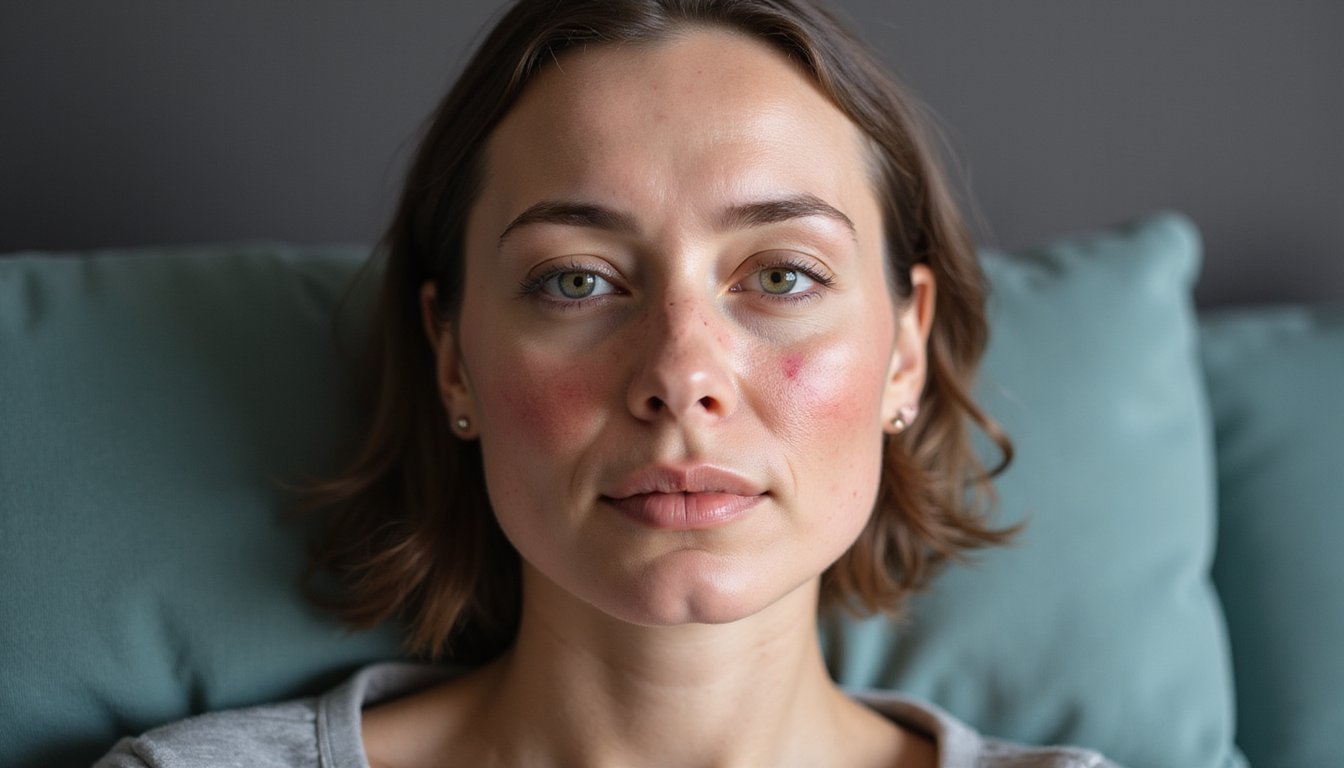
When you drink alcohol, your body launches an inflammatory response that affects your skin’s blood vessels and immune function. This inflammation causes your capillaries to dilate and become more permeable, leading to visible redness, broken blood vessels, and that characteristic flushed appearance. If you’re prone to rosacea, alcohol consumption can trigger acute flare-ups and worsen the condition over time. Research also shows that ethanol ingestion increases acetaldehyde concentration in your body, which can disrupt microbiota homeostasis and contribute to skin problems. Additionally, alcohol and its metabolites can enhance keratinocyte proliferation, which affects how your skin cells regenerate and may contribute to various inflammatory skin conditions.
Alcohol’s Inflammatory Response
Alcohol triggers a cascade of inflammatory responses that directly damage your skin’s appearance and structure. When you drink, your body initiates cytokine production in skin cells, activating the Th17 pathway that recruits inflammatory cells to your epidermis. Simultaneously, ethanol metabolism generates oxidative stress through acetaldehyde formation, producing reactive oxygen species that attack cellular structures.
How alcohol inflames your skin:
- Stimulates inflammatory cytokines in keratinocytes, promoting chronic subliminal inflammation
- Activates Th17-related pathways, causing epidermal thickening and visible scaling
- Increases microvascular permeability, resulting in persistent flushing and redness
- Generates acetaldehyde-induced oxidative damage, weakening your skin’s structural integrity
These mechanisms don’t operate in isolation, they compound each other, accelerating visible aging while increasing your susceptibility to inflammatory conditions like rosacea and psoriasis. Research shows that even low concentrations of alcohol can induce CCL20 expression in epidermal keratinocytes, a chemokine that attracts inflammatory immune cells to the skin. Additionally, alcohol weakens the immune system and impairs nutrient absorption, further compromising your skin’s ability to repair itself and fight off inflammatory damage.
Broken Capillaries Explained
While your skin’s inflammatory response damages cellular structures from within, alcohol simultaneously attacks your vascular system through a distinct but equally destructive pathway.
When you drink, acetaldehyde triggers histamine release, causing blood vessels to dilate and push closer to your skin’s surface. This creates the characteristic flushed appearance. With chronic consumption, repeatedly stretched capillaries weaken and lose their ability to contract normally.
The connection between does alcohol cause wrinkles and vascular damage becomes evident as these weakened vessels rupture. Spider veins emerge around your nose and cheeks, becoming permanent facial features. Alcohol premature aging accelerates when dehydration compounds this damage, reducing the elasticity your blood vessels need to function properly. This unhealthy skin appearance can persist for days after alcohol consumption, making the damage increasingly difficult to conceal.
These broken capillaries remain visible even after you stop drinking, requiring laser treatments or sclerotherapy for removal. While topical skincare can help reduce redness and improve skin resilience, laser technology is the most effective solution for addressing established spider veins around the nose.
Rosacea and Drinking Link
Beyond broken capillaries, chronic alcohol consumption significantly increases your risk of developing rosacea, a condition that amplifies visible blood vessel damage and facial redness. Research following 82,737 women found those consuming ≥30 g/day of alcohol had a 53% higher rosacea risk compared to non-drinkers.
When considering does drinking cause wrinkles, understand that rosacea accelerates this process through:
- Persistent vasodilation that stretches and weakens blood vessel walls
- Pro-inflammatory immune responses that damage collagen structure
- Chronic dehydration that diminishes skin’s protective barrier
- Tissue thickening from repeated inflammatory flares
Does drinking give you wrinkles? The alcohol and wrinkles connection intensifies when rosacea develops. Red wine triggers symptoms in 76% of sufferers, while white wine and liquor show statistically significant associations with disease progression. Alcohol can also induce cell cycle activators that may contribute to epidermal hyperproliferation characteristic of rosacea. With approximately 415 million people worldwide suffering from rosacea, understanding alcohol’s role as a trigger is essential for preventing accelerated skin aging.
Facial Aging Signs Linked to Regular Alcohol Consumption

Regular alcohol consumption leaves distinct marks across your face that reveal its aging effects. You’ll notice increased upper facial lines, including crow’s feet and glabellar wrinkles, alongside persistent under-eye puffiness that develops even with moderate drinking of zero to seven beverages weekly. Heavy drinkers also experience midface volume loss as alcohol depletes fat mass and hydration, creating a hollowed appearance that adds years to your face. Those who drink heavily may also develop more visible blood vessels on their cheeks, adding to the aged appearance. Research confirms that alcoholics displayed seven out of eleven facial features associated with aging, demonstrating how alcohol consumption causes accelerated facial aging across multiple areas of the face.
Upper Facial Lines Increase
Heavy alcohol consumption, defined as eight or more drinks per week, significantly increases upper facial line severity compared to abstaining from alcohol entirely. Research involving 3,267 women across multiple continents demonstrates a dose-dependent relationship: the more you drink, the more pronounced your facial aging becomes. This large multinational study included participants from the US, Australia, Canada, and UK, providing more accurate data than previous smaller investigations.
Your skin’s vulnerability increases through specific mechanisms:
- Your dermal carotenoid levels drop, weakening antioxidant defenses against UV damage
- Your collagen degradation accelerates from cumulative cellular damage
- Your facial fat mass decreases, accentuating lines and creases
- Your blood vessels dilate, creating visible capillaries across your face
Moderate consumption (under seven drinks weekly) doesn’t show statistically significant associations with upper facial lines. However, once you cross the eight-drink threshold, your aging trajectory accelerates measurably, with statistical significance confirmed at p≤0.042.
Under-Eye Puffiness Development
While upper facial lines reveal alcohol’s impact on your skin’s structural integrity, the delicate tissue beneath your eyes tells an equally damaging story. Alcohol’s diuretic effect triggers dehydration, prompting your body to compensate by retaining fluid in facial tissues. This accumulation concentrates beneath your eyes, where thin skin makes swelling immediately visible.
Simultaneously, alcohol dilates blood vessels, increasing blood flow to small capillaries under your eye area. This vasodilation causes pronounced puffiness and redness while stretching delicate capillaries with each drinking episode.
Your immune system recognizes alcohol as a toxin, initiating an inflammatory response that swells facial tissues. Chronic inflammation accelerates skin aging and weakens structural support. Temporary puffiness typically resolves within 24 hours, but regular consumption creates permanent bags as repeated fluid retention and inflammation progressively damage under-eye tissue elasticity.
Midface Volume Loss
Beyond the under-eye area, alcohol consumption accelerates volume loss in your midface, a hallmark of facial aging that affects cheek fullness and structural support. Research shows even moderate drinking (0-7 drinks weekly) correlates with midface deflation, while heavy consumption (≥8 drinks weekly) demonstrates significant association (p≤0.042) with volume-related aging. Beyond the under-eye area, alcohol consumption accelerates volume loss in your midface, a hallmark of facial aging that affects cheek fullness and overall structural support. This midface deflation helps explain does alcohol make you look older, as reduced volume changes facial contours long before deep wrinkles fully form. Research shows that even moderate drinking (0, 7 drinks weekly) correlates with measurable midface volume loss, while heavy consumption (≥8 drinks weekly) demonstrates a statistically significant association (p ≤ 0.042) with volume-related aging.
How alcohol depletes your midface volume:
- Ethanol’s diuretic effect dehydrates skin, causing sagging and structural collapse
- Chronic inflammation dilates blood vessels, disrupting facial tissue integrity
- Decreased dermal carotenoid concentrations impair your skin’s antioxidant defense
- Reduced collagen production diminishes elasticity and cheek support
Notably, smoking doesn’t produce this specific effect, alcohol uniquely targets midface volume. Whether you drink wine, champagne, or other beverages, the inflammatory cascade contributes to progressive cheek deflation and aged facial contours.
What Scientific Studies Reveal About Alcohol and Skin Aging
Research consistently demonstrates that alcohol accelerates skin aging through multiple biochemical pathways. A multinational survey of women found that heavy alcohol consumption (≥8 drinks weekly) substantially increases upper facial lines, under-eye puffiness, and midface volume loss. Even moderate intake shows measurable effects, consuming 10 versus 2 glasses of wine weekly advances your biological age by 1-2 years through telomere shortening.
The dose-response relationship is striking. Increasing from 10 to 32 units weekly equates to 3 years of biological aging. Studies show alcoholics exhibit 7 of 11 recognized facial aging features, while even infrequent users demonstrate puffiness and midface volume loss.
Your antioxidant defenses suffer directly, alcohol depletes dermal carotenoid concentrations and vitamin A levels, impairing skin renewal. These findings confirm no safe threshold exists for preventing alcohol-related skin aging. Your antioxidant defenses suffer directly, alcohol depletes dermal carotenoid concentrations and vitamin A levels, impairing normal skin renewal and repair. This evidence helps answer how much does alcohol age your skin, showing that even moderate intake can measurably weaken protective antioxidant systems. These findings confirm that no truly safe threshold exists for fully preventing alcohol-related skin aging.
How Alcohol Affects Oil Production and Causes Breakouts
Your skin’s oil production shifts into overdrive when alcohol enters your system, creating a cascade that leads directly to breakouts. Ethanol triggers lipogenesis in sebocytes, while dehydration prompts sebaceous glands to overcompensate by producing excess sebum. Elevated testosterone and spiking insulin levels further amplify this oil surge.
Alcohol sends your skin’s oil production into overdrive, triggering a cascade of excess sebum that clogs pores.
How alcohol triggers breakouts:
- Hormonal disruption elevates androgens, forcing sebaceous glands to pump out excess sebum
- Dehydration weakens your skin barrier, causing compensatory oil overproduction
- Excess sebum mixes with dead skin cells, clogging pores and forming blackheads
- Acetaldehyde production creates inflammation that transforms clogged pores into painful pimples
A 2024 study confirms alcohol directly triggers oil production in sebum-creating cells. Heavy drinkers show higher acne prevalence through these combined oil and inflammation pathways.
The Impact of Drinking on Your Skin’s Antioxidant Defense System
When alcohol enters your bloodstream, it launches a direct assault on the antioxidant defense system that protects your skin from premature aging. Your liver metabolizes ethanol through the CYP2E1 enzyme, generating superoxide anions and reactive oxygen species that overwhelm your natural defenses. This oxidative stress depletes essential skin-protective carotenoids and compromises vitamin C levels critical for collagen synthesis.
The consequences extend beyond internal damage. With diminished antioxidants, your skin becomes more susceptible to UV radiation. Studies show alcohol consumption decreases your minimal erythema dose, meaning you’ll burn faster and sustain greater photodamage. The resulting reactive oxygen species attack collagen and elastin fibers directly, accelerating wrinkle formation. Additionally, lipid peroxidation disrupts your skin barrier, causing transepidermal water loss that persists two to four weeks after drinking.
Reversing Alcohol-Related Skin Damage Through Lifestyle Changes
Although alcohol inflicts significant oxidative damage on your skin, strategic lifestyle modifications can reverse much of this harm and restore your complexion’s liveliness. Your skin possesses remarkable regenerative capacity when you eliminate the underlying stressor and implement targeted interventions.
Research confirms these evidence-based strategies accelerate skin recovery:
- Hydrate aggressively, consume 8, 10 glasses of water daily and apply hyaluronic acid serum to replenish depleted moisture reserves.
- Prioritize antioxidant-rich nutrition, incorporate vitamins A, C, and E alongside omega-3 fatty acids to support collagen synthesis.
- Establish consistent sleep patterns, quality rest promotes cellular turnover and reduces inflammation-induced puffiness.
- Commit to daily SPF protection, shield healing skin from UV damage that compounds alcohol’s oxidative effects.
These modifications work synergistically, enabling your skin’s natural repair mechanisms to rebuild compromised structural integrity.
Your Body Notices Before You Do
Frequently Asked Questions
Does the Type of Alcohol You Drink Affect Wrinkle Formation Differently?
Yes, the type of alcohol you drink affects wrinkle formation differently. Dark spirits like whiskey and rum contain congeners that intensify inflammation and compromise your skin’s elasticity. Clear spirits like vodka and gin metabolize faster, minimizing skin damage. Red wine dilates blood vessels and triggers inflammation, while sugary mixed drinks accelerate glycation, stiffening your collagen. You’ll reduce aging effects by choosing clear spirits with sugar-free mixers over darker alternatives.
How Long After Quitting Alcohol Will Skin Improvements Become Visible?
You’ll notice skin improvements within days of quitting alcohol. Your body restores hydration quickly, reducing dullness and dryness almost immediately. Within one to four weeks, fine lines diminish as elasticity returns, and puffiness decreases. By one to three months, collagen production increases, firming your skin and fading redness. After three months, you’ll see significant wrinkle reduction and a more youthful complexion, though full restoration requires sustained sobriety and proper nutrition.
Can Topical Skincare Products Counteract Alcohol’s Aging Effects on Skin?
Yes, topical skincare products can partially counteract alcohol’s aging effects on your skin. You’ll benefit from retinoids that boost collagen production, hyaluronic acid to restore hydration lost through alcohol’s diuretic action, and vitamin C serums that combat glycation damage. Niacinamide reduces inflammation and redness from dilated blood vessels. However, these products work best alongside reduced alcohol consumption, they can’t fully reverse ongoing damage if you’re continuing heavy drinking.
Does Moderate Social Drinking Cause Less Skin Damage Than Binge Drinking?
Yes, moderate social drinking causes substantially less skin damage than binge drinking. When you drink heavily (more than 8 drinks weekly), you’ll experience more visible blood vessels, deeper upper facial lines, and pronounced under-eye puffiness. Moderate consumption shows minimal associations with most aging features, though you may still notice some midface volume loss. Binge drinking’s dehydration and inflammation effects are persistent, while moderate drinking’s impacts remain largely temporary and less severe.
Are Some People Genetically More Prone to Alcohol-Related Skin Aging?
Yes, your genetic makeup markedly influences how alcohol affects your skin. Variations in your ALDH2 enzyme determine how efficiently you detoxify alcohol’s harmful byproducts, particularly acetaldehyde, which causes oxidative stress and damages skin cells. Research shows people of African ancestry experience greater epigenetic age acceleration than those of European ancestry when consuming similar amounts. If you carry less protective gene variants, you’ll likely accumulate more alcohol-related skin damage rapidly.