Traditional tiramisu typically contains alcohol, usually Marsala wine, rum, or coffee liqueur, that’s added to the ladyfinger soak or mascarpone cream. Since tiramisu is a no-bake dessert, the alcohol never cooks off and retains nearly 100% of its potency in each serving. However, authentic Italian recipes from the Veneto region actually exclude alcohol entirely, relying only on espresso and quality mascarpone for flavor. Understanding which version you’re eating matters, especially when serving kids or non-drinkers.
Traditional tiramisu typically contains alcohol, usually Marsala wine, rum, or coffee liqueur, that’s added to the ladyfinger soak or mascarpone cream, which is why the question Does Tiramisu Have Alcohol often arises. Since tiramisu is a no-bake dessert, the alcohol never cooks off and retains nearly 100% of its potency in each serving. However, authentic Italian recipes from the Veneto region actually exclude alcohol entirely, relying only on espresso and quality mascarpone for flavor. Understanding which version you’re eating matters, especially when serving kids or non-drinkers.
Does Traditional Tiramisu Contain Alcohol?
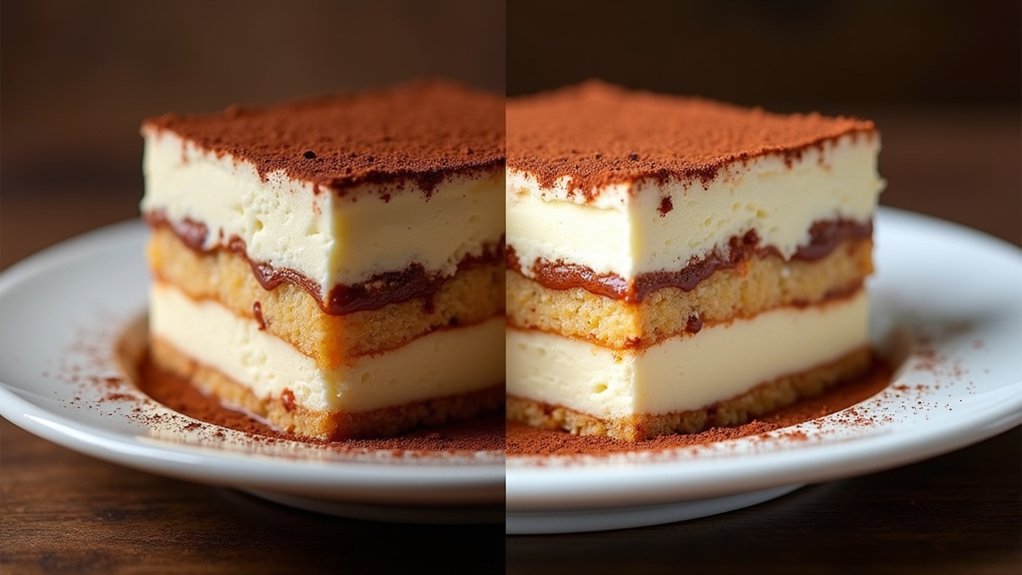
When you examine traditional tiramisu recipes, you’ll find a genuine debate among culinary experts and Italian food historians about alcohol’s role in the original preparation. Some sources confirm authentic Italian tiramisu includes Marsala wine in the filling and liqueur-soaked ladyfingers, while others insist the original Treviso version uses only espresso without alcohol flavoring.
The dessert alcohol content varies remarkably between preparations. Traditional recipes incorporating wine-infused desserts typically use fortified Marsala for its caramel notes and liqueur aroma. However, the alcohol in desserts remains uncooked in the coffee soak, meaning it’s detectable in taste. You can substitute rum extract or other alcohol substitutes to achieve similar depth. The alcohol serves an important purpose as it helps to infuse the ladyfingers and contributes to the overall flavor profile of the dessert. In the filling, the Marsala wine is cooked with egg yolks and sugar over a double boiler, which likely cooks out most of the alcohol. Whether you’re preparing alcohol-based desserts or seeking the traditional recipe, understanding these variations helps you make informed choices about authentic Italian tiramisu. Notably, the original recipe filed with the Accademia Italiana della Cucina in 2010 from Le Beccherie restaurant contains no alcoholic beverages, consisting only of egg yolks, mascarpone cheese, sugar, Savoiardi biscuits, espresso, and cocoa powder.
Which Alcohols Are Used in Classic Tiramisu?
Although Marsala wine remains the traditional alcohol in classic tiramisu, modern recipes frequently incorporate dark rum, coffee liqueur, amaretto, or brandy to achieve distinct flavor profiles. Each spirit contributes unique characteristics, Marsala offers caramel-vanilla warmth, while dark rum adds spiced sweetness and coffee liqueur deepens espresso notes. Conversely, vodka and gin should be avoided since their harsh botanical profiles do not complement the dessert’s flavors.
When selecting alcohol for your tiramisu recipe, consider these factors:
- Alcohol content varies greatly, Marsala wine contains 15-20% alcohol percentage, whereas dark rum and brandy range from 35-40%
- Alcohol evaporation doesn’t occur in traditional tiramisu since it’s a no-bake dessert
- Amaretto provides complementary almond undertones that enhance cocoa and mascarpone layers
Standard recipes use 3-7 tablespoons total, distributed across 12 servings. This controlled quantity ensures the alcohol supports rather than dominates your traditional tiramisu’s balanced flavor architecture. For optimal results, whisk together the marsala wine and cooled room temperature espresso in a shallow bowl before dipping your ladyfingers. Be careful not to soak the ladyfingers too long, as this will result in a soft or soggy texture that compromises the dessert’s structure.
Is Authentic Tiramisu Made With or Without Alcohol?
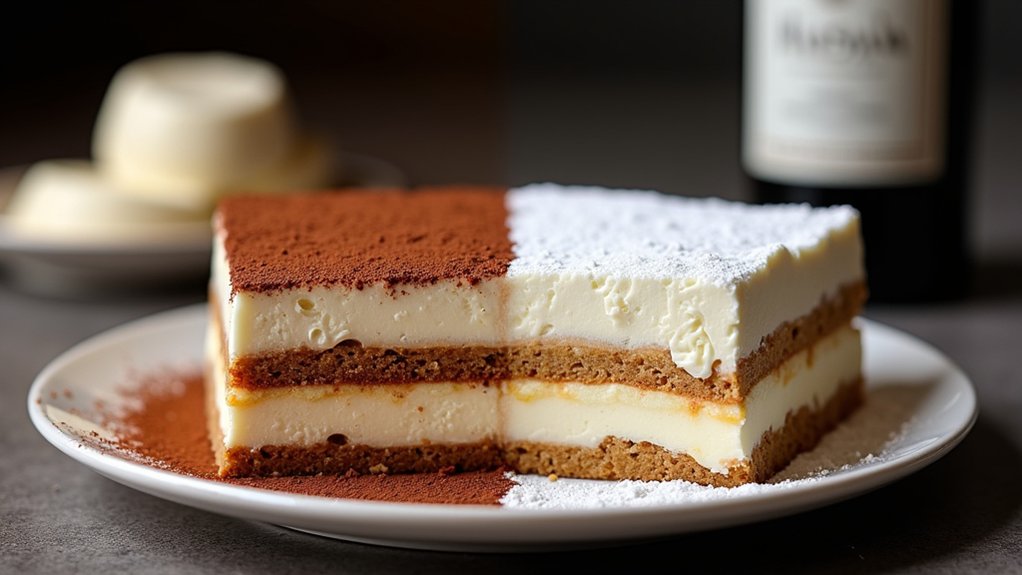
The debate over whether authentic tiramisu contains alcohol reveals a significant divide between traditional Italian sources and widely circulated online recipes. You’ll find Italian cuisine purists from Veneto and Treviso insisting the original recipe excludes Marsala wine entirely, relying solely on espresso soak for the ladyfingers.
Traditional preparation calls for six core ingredients: egg yolks, mascarpone cheese, sugar, Savoiardi biscuits, coffee infusion, and cocoa powder. The mascarpone mixture gains richness from eggs, not spirits. Your coffee soak uses pure espresso without added liqueur. Authentic Italian tiramisu uses whipped egg whites for a lighter, airier texture rather than alcohol-based enhancement.
However, many bakery tiramisu versions incorporate alcohol as a modern adaptation. The coffee mixture often includes rum or Marsala in contemporary recipes. If you’re seeking alcohol-free tiramisu matching authentic standards, look for preparations using only espresso-based coffee infusion without spirits in the filling or soak.
How Much Alcohol Remains After Cooking?
Understanding whether authentic tiramisu contains alcohol naturally leads to a practical question: how much of that alcohol actually stays in your dessert?
Unlike cooking methods that apply direct heat, tiramisu recipes involve no-bake dessert preparation. This distinction matters considerably for alcohol evaporation rates. When you simmer or bake dishes, alcohol content decreases based on cooking time:
Tiramisu’s no-bake preparation means alcohol never gets the chance to cook off like it would in heated dishes.
- 15 minutes of cooking retains approximately 40% of original alcohol
- 30 minutes of cooking reduces retention to roughly 35%
- One hour of cooking lowers alcohol to about 25%
Since tiramisu undergoes no heat treatment, alcohol retention remains at nearly 100%. Your alcohol-containing desserts maintain their full ethanol content throughout assembly. Even when alcohol is mixed with hot coffee during the soaking process, a portion still remains in the finished dessert. Traditional recipes typically include Marsala wine or rum, which means the full potency of these spirits persists in every bite. For those monitoring alcohol consumption, alcohol-free alternatives provide the safest option, eliminating guesswork about retention entirely.
Is Tiramisu Safe for Kids and Non-Drinkers?
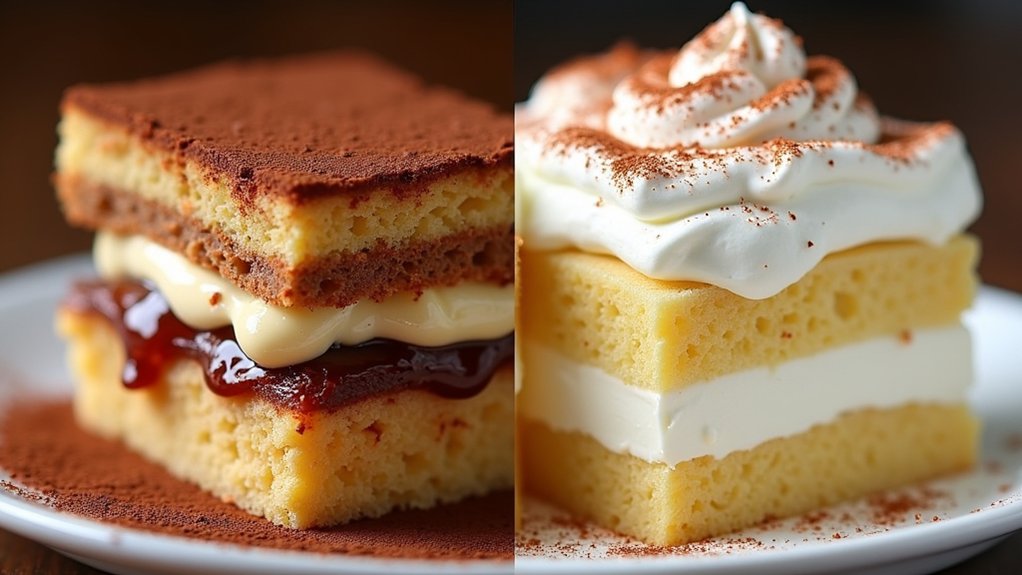
If you’re serving tiramisu to children or non-drinkers, you’ll want to swap traditional Marsala wine, rum, or amaretto with espresso-only soaking methods or alcohol-free flavor extracts like almond. Kid-friendly versions rely solely on coffee-soaked ladyfingers paired with mascarpone cream, eliminating any ethanol exposure since tiramisu isn’t baked to evaporate alcohol. When preparing for guests who avoid alcohol for health, religious, or personal reasons, clearly label your dessert or confirm ingredients with your bakery to guarantee the recipe meets their dietary needs. Recent regulatory cases have emphasized that alcoholic products like tiramisu-flavored liqueurs must communicate their alcoholic nature with absolute clarity to prevent consumer confusion, highlighting the broader importance of transparent labeling in food and beverages. For those monitoring their intake, a standard piece of traditional tiramisu contains approximately 33g of sugar, making it important to consider portion sizes when serving to children. Notably, the annual “traditional” tiramisu competition held in the Veneto region bans alcohol from its recipes, proving that authentic-tasting tiramisu can be made without any spirits.
Kid-Friendly Recipe Alternatives
Many families wonder whether traditional tiramisu works for children and non-drinkers, and the answer depends entirely on recipe formulation. You can create a kid-friendly dessert by eliminating alcohol completely while preserving this Italian pastry’s signature layers.
For your homemade tiramisu, focus on these essential modifications:
- Coffee-based dessert adjustment: Replace espresso with decaffeinated coffee or substitute warm milk with vanilla extract for younger children.
- Alcohol elimination: Skip Marsala, rum, and liqueurs entirely, use additional coffee or fruit juice in your soak.
- Core ingredients retention: Keep egg-based dessert components (yolks, mascarpone, sugar) and quality savoiardi ladyfingers intact.
This dairy dessert and no-bake Italian sweet maintains authentic texture through proper chilling. Your family dessert succeeds with dessert recipe variations that prioritize safety while honoring Italian sweet dishes’ traditional layered construction.
Alcohol-Free Serving Considerations
Traditional tiramisu recipes call for alcohol, typically Marsala wine, dark rum, amaretto, or coffee liqueur, soaked directly into the ladyfingers, and because this dessert isn’t baked, that alcohol doesn’t cook off. You’re dealing with measurable alcohol residue that remains in every serving.
When evaluating food alcohol safety, consider the ABV of each component: Marsala wine notes around 15-20% ABV, rum notes hover near 40%, and liqueur notes vary between 20-28%. This alcohol volume matters for kids and non-drinkers who must avoid any ethanol exposure.
Before ordering, verify the restaurant recipe specifications. Ask staff directly about dessert allergens and alcohol content, menus often omit these details. For strict abstinence, request explicitly alcohol-free versions or confirm substitutions. You’ll protect both children and guests observing religious or health-based restrictions.
How to Make Tiramisu Without Alcohol
Creating authentic tiramisu without alcohol starts with assembling the right core ingredients: fresh egg yolks, high-quality mascarpone cheese, granulated sugar, Savoiardi ladyfingers, freshly brewed espresso, and unsweetened cocoa powder.
Authentic tiramisu begins with quality mascarpone, fresh eggs, espresso, and Savoiardi ladyfingers, no alcohol required.
For your ladyfinger soak, use cooled espresso instead of alcohol-infused liquid. Add a few drops of almond extract to mimic amaretto’s nutty depth without the buzz. Whip egg yolks with sugar over a double boiler until thickened, then fold in chilled mascarpone for a smooth cream filling.
Three essential steps guarantee perfect non-alcoholic tiramisu:
- Dip ladyfingers briefly in espresso to prevent soggy coffee layers
- Alternate dessert layering between soaked biscuits and mascarpone filling
- Finish with generous cocoa topping, then refrigerate six hours
This method delivers authentic flavor while keeping your dessert completely alcohol-free.
Frequently Asked Questions
Can Tiramisu Alcohol Content Affect People Taking Acetaminophen or Other Liver-Processed Medications?
Yes, tiramisu’s alcohol can affect you if you’re taking acetaminophen or other liver-processed medications. Even small amounts of ethanol compete for the same liver enzymes, potentially increasing drug levels or toxic metabolite accumulation. Alcohol depletes glutathione, which your liver needs to neutralize acetaminophen’s harmful byproduct NAPQI. If you’re on medication, you should choose alcohol-free tiramisu or consult your healthcare provider before consuming traditional versions containing Marsala, rum, or liqueurs.
How Long Does It Take for the Body to Clear Alcohol From Tiramisu?
Your body typically clears the small amount of alcohol from a tiramisu serving within 15 minutes to 2 hours. A standard slice contains roughly 2, 3 grams of ethanol, which your liver metabolizes quickly through ADH and ALDH enzymes. The dessert’s creamy mascarpone and sugar matrix slows absorption, extending processing time slightly. Factors like body weight, genetics, and whether you’ve eaten beforehand influence clearance speed. You won’t experience intoxication from typical portions.
What Symptoms Indicate Alcohol Sensitivity After Eating Tiramisu Dessert?
You’ll notice alcohol sensitivity after eating tiramisu through several telltale signs. Watch for facial flushing, rapid heartbeat, headaches, or nasal congestion appearing within 20-30 minutes. You might also experience nausea, stomach cramping, hives, or skin redness on your face and neck. More severe reactions include low blood pressure, dizziness, or worsening asthma symptoms. If you develop throat swelling, difficulty breathing, or a weak pulse, seek immediate medical attention.
Does Eating Tiramisu After a Meal Reduce Alcohol Absorption Rates?
You’ll likely experience slower alcohol absorption when eating tiramisu after a meal. The food already in your stomach delays gastric emptying, reducing peak blood alcohol levels. Tiramisu’s high-fat mascarpone content reinforces this effect by further slowing digestion. However, the alcohol quantity in a typical serving (1-2 teaspoons of alcohol-infused liquid) is too minimal for measurable impact. No direct research examines tiramisu-specific absorption rates, though general alcohol science supports this delayed absorption pattern.
Are There Liver Warning Signs to Watch for After Consuming Alcohol-Containing Desserts?
You should watch for specific warning signs after consuming alcohol-containing desserts like tiramisu. Monitor for jaundice (yellowing skin or eyes), upper right abdominal pain, dark urine, persistent nausea, unusual fatigue, and loss of appetite. These symptoms indicate potential liver stress from ethanol metabolism. While tiramisu’s alcohol content rarely triggers such responses in healthy individuals, you’ll want to seek medical attention if multiple signs appear, especially if you’ve pre-existing liver conditions.