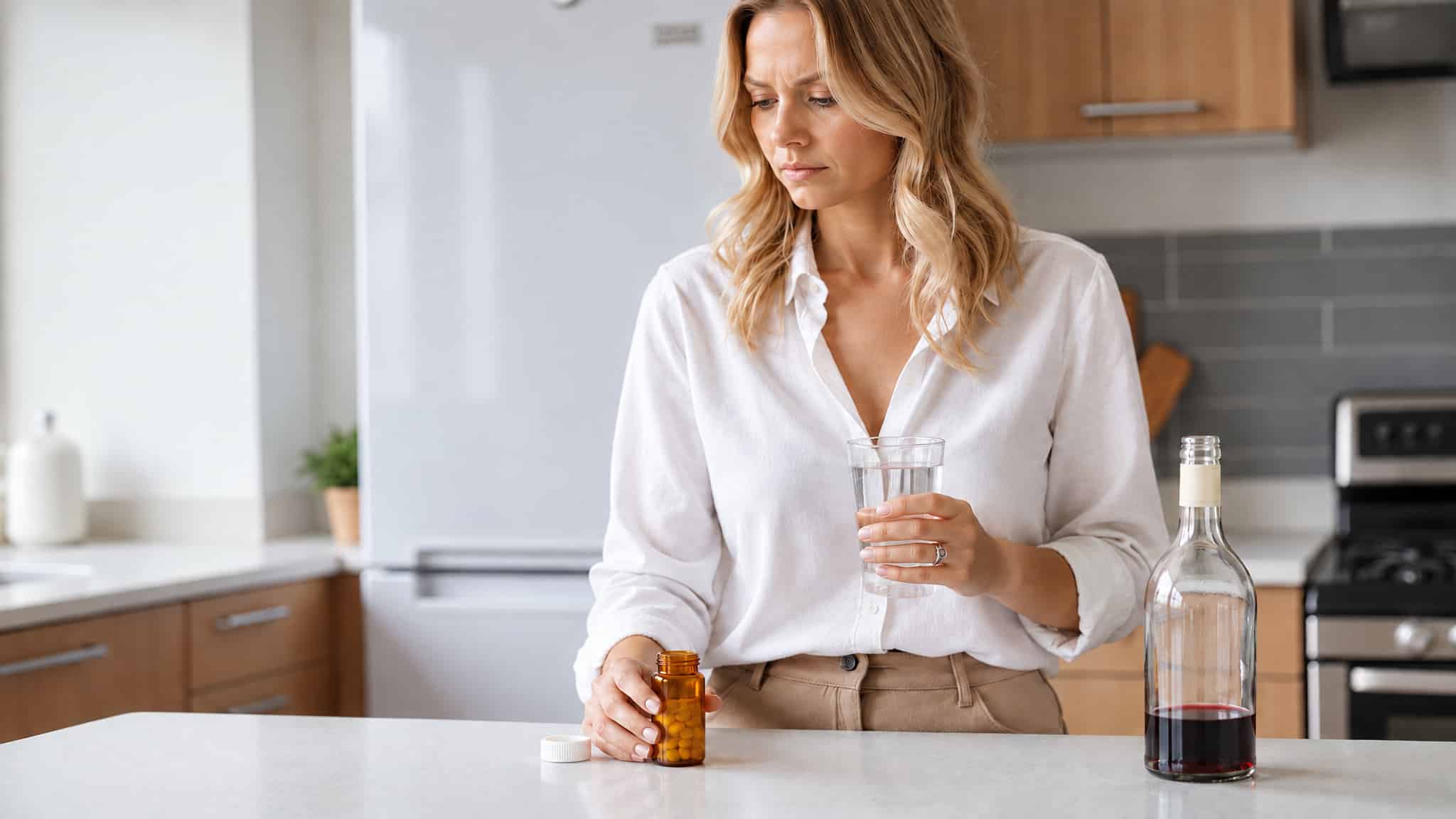
Yes, drinking can dull your antidepressant’s effect, and the more you drink, the less benefit you’re likely to get. Alcohol is a depressant itself, so it can worsen the low mood and hopelessness your medication targets. Heavy or ongoing drinking can delay improvement and make it less substantial. It can also amplify drowsiness, dizziness, and impaired coordination. Your medication, drinking pattern, and dosing habits all shape the risk you’re taking, as the details below show.
Key Takeaways
- Yes, drinking can reduce antidepressant effectiveness, and the risk rises as alcohol consumption increases, especially with heavy drinking.
- Alcohol is a depressant that can worsen low mood and hopelessness, directly counteracting what antidepressants are meant to treat.
- Ongoing or heavy drinking blunts medication benefit more than occasional drinking and can delay or limit improvement.
- Combining alcohol with antidepressants can intensify drowsiness, dizziness, and impaired coordination, and skipping doses to drink further weakens treatment.
- Keep taking antidepressants as prescribed, tell your prescriber or pharmacist about drinking, and check your medication leaflet for alcohol warnings.
Does Alcohol Reduce the Effect of Antidepressants

Yes, alcohol can make your antidepressant less effective. According to NIAAA guidance, drinking may reduce how well your medication works, and the risk rises as your consumption increases.
If you’re drinking actively, your improvement may come more slowly and be less substantial. One clinical source reports response can take up to eight weeks. Alcohol also independently worsens depression, so it’s harder for you and your clinician to tell whether the medication isn’t working or alcohol is driving your symptoms.
Drinking can also lower adherence, and missed doses weaken treatment. Even a single day of resumed drinking can worsen depression in some cases. Evidence on treating co-occurring alcohol use and depression remains limited, so outcomes vary.
How drinking works against what the medication is doing
Alcohol actively counteracts the work your antidepressant is doing. Alcohol is a depressant in its own right, so it can worsen the very symptoms your medication targets, including low mood and hopelessness. Even a single day of resumed drinking can exacerbate depression in some cases. Alcohol and your medication can also interact when you don’t take them at the same time, intensifying drowsiness, dizziness, and impaired coordination.
Drinking muddies your progress, too. When symptoms persist, you and your prescriber can’t easily tell whether the medication isn’t working or alcohol is driving the decline. Alcohol may also reduce adherence, and missed doses further weaken treatment. NIAAA notes that interaction risks rise as consumption increases. Heavy, ongoing drinking poses the greatest overall risk.
Why the pattern of drinking matters more than any single drink

Your overall drinking pattern shapes how well your antidepressant works more than any single drink does, though an occasional drink can still carry risks. NIAAA guidance states that interaction risk rises as your consumption rises.
- Heavy or ongoing drinking is more likely to blunt your medication’s benefit than occasional drinking.
- Active drinking can delay improvement for up to eight weeks and make it less substantial.
- A single day of resumed drinking can worsen depression in some cases.
- Regular alcohol use makes it harder to tell whether your medication isn’t working or alcohol is driving symptoms.
- Relapses often coincide with stopping antidepressants, which can deepen depression and risk treatment failure.
Track your intake honestly and share it with your prescriber so they can judge your response and adjust treatment.
How different antidepressant classes are affected
Alcohol’s risks vary by antidepressant class, since each class acts on different brain and body systems.
| Medication | Key alcohol risk |
|---|---|
| SSRIs (sertraline/Zoloft, escitalopram/Lexapro, fluoxetine/Prozac) | Alcohol can deepen drowsiness and worsen low mood, blunting the medication’s benefit |
| MAOIs (phenelzine, tranylcypromine) | Tyramine in some beer and wine can sharply raise blood pressure |
| Bupropion | Alcohol, especially heavy use or withdrawal, may increase seizure risk |
| Duloxetine | Combined use may increase liver toxicity risk |
Sedation is another concern. Alcohol can intensify drowsiness from tricyclic antidepressants and mirtazapine, impairing coordination and raising accident risk. One cited study linked venlafaxine plus alcohol to a lower threshold for fatal overdose.
Since warnings differ by drug, check your medication leaflet and ask your prescriber or pharmacist about your specific antidepressant before drinking. Don’t skip doses to make drinking safer, as that can further worsen your depression.
SSRIs such as Zoloft, Lexapro, and Prozac are the most commonly prescribed antidepressants, and while they don’t carry the sharp interactions of MAOIs, mixing them with alcohol still worsens mood and sedation and works against the medication.
Which side effects get amplified alongside the lost benefit

Alcohol amplifies drowsiness, dizziness, impaired coordination, and low mood with almost any antidepressant, while also weakening the medication’s benefit. Watch for these combined effects:
- Drowsiness: Sedation can deepen, especially with tricyclics or mirtazapine.
- Dizziness: You may feel lightheaded.
- Impaired coordination: Slower motor control raises your risk of falls and accidents.
- Worsening mood: Alcohol can intensify depression and hopelessness, even while you’re medicated.
- Delayed interactions: Effects can overlap even when you don’t drink and dose simultaneously.
Because alcohol itself worsens depression, you and your prescriber may struggle to tell whether the medication’s failing or drinking’s masking its effect. Don’t drive or operate machinery if you notice these symptoms, and don’t skip doses to make drinking safer; that can deepen symptoms further.
Why skipping doses in order to drink makes things worse
Skipping antidepressant doses to drink makes things worse because it removes your treatment while leaving alcohol’s depressive effects in place, so it doesn’t make drinking safer. Alcohol interacts with medicines even when you don’t take them at the same time, so timing your doses around drinks won’t eliminate risk.
Alcohol itself can deepen depression and hopelessness, and a single day of resumed drinking can exacerbate symptoms in some people. Clinical evidence links alcohol-related relapses with stopping antidepressants, and that combination raises the risk of worsening depression and treatment failure. Missed doses also blur assessment: you and your prescriber can’t tell whether the medication isn’t working or alcohol is driving your symptoms.
Keep taking your medication as prescribed, and ask your prescribing clinician before changing or stopping any dose.
What to do if you are drinking while on antidepressants
Tell your prescriber or pharmacist that you’re drinking, and keep taking your antidepressant as prescribed. Stopping or skipping doses can worsen depression and increase your risk of treatment failure. Alcohol warnings differ by drug, so take these steps:
Keep taking your antidepressant as prescribed, and tell your prescriber or pharmacist that you’re drinking. Skipping doses can worsen depression.
- Check your medication leaflet for alcohol-specific warnings.
- Seek prompt advice if you take bupropion, duloxetine, an MAOI, or another drug with a specific alcohol warning.
- Avoid driving or hazardous activities if you feel drowsy, dizzy, or uncoordinated.
- Track your drinking and mood so your clinician can tell nonresponse apart from alcohol-related worsening.
- Ask about support for cutting back, since interaction risk rises as consumption increases.
Until your prescriber clarifies your medication’s risks, avoid alcohol. Any treatment changes should be clinician-guided.
Conclusion
Alcohol and antidepressants work against each other. The medication is trying to lift your mood; alcohol is a depressant pulling it back down, and the more you drink, the less benefit you are likely to feel. Heavy or ongoing drinking is what does the real damage, delaying improvement, deepening side effects, and making it impossible to tell whether the medication is failing or the drinking is. The safest move is not to time your doses around drinks or skip them to drink, but to keep taking the medication as prescribed and be honest with your prescriber about how much you drink. If cutting back feels harder than it should, that is worth treating in its own right.
Get Help When Drinking and Depression Are Tangled Together
If you’re on an antidepressant and finding it hard to cut back on drinking, treating one without the other rarely holds. The Hope Institute in Paramus, NJ provides outpatient alcohol addiction treatment alongside dual diagnosis treatment that addresses depression and drinking in one coordinated plan, with cognitive behavioral therapy, counseling, and a team that coordinates with your prescriber. Contact us to verify your insurance or call (855) 659-2310 to talk it through.
Frequently Asked Questions
How Long After Quitting Alcohol Might Antidepressants Start Working Better?
There’s no established timeline for when your antidepressant starts working better after you quit drinking. Clinical guidance shows active drinking can delay response by up to eight weeks and blunt its strength, so stopping may help you, though outcomes vary. Alcohol also worsens depression, which makes progress hard to judge. Don’t skip doses or change medication on your own. Ask your prescriber to track your symptoms and review any medication interactions.
Can Antidepressants Help Reduce Alcohol Cravings or Support Sobriety?
Antidepressants aren’t proven to reduce alcohol cravings directly, and evidence on treating co-occurring depression and alcohol use disorder remains limited. They can ease depression while you’re drinking, though improvement may be slower and weaker. One 12-week trial in older adults found 42% remitted without relapsing to heavy drinking, but results may not apply to you. Don’t stop your medication during a relapse; ask your prescriber promptly about evidence-based craving treatments.
Is It Safe to Drink Alcohol After Finishing an Antidepressant Course?
It’s often safer once you’ve finished, but you shouldn’t assume risk disappears immediately. Alcohol and medicines can interact even when you don’t take them together, so ask your prescriber or pharmacist when your specific drug, especially an MAOI, bupropion, or duloxetine, no longer poses a concern. Alcohol can also worsen depression symptoms, and a single day of drinking can exacerbate depression, so monitor your mood closely and drink only cautiously.
Should I Be Honest With My Doctor About How Much I Drink?
Yes, you should tell your doctor exactly how much you drink. Alcohol can reduce antidepressant response, slow improvement, and worsen depression, making it hard to tell whether your medication’s working. Interaction risks also rise with heavier drinking, and some drugs, including bupropion, duloxetine, and MAOIs, carry specific dangers. Accurate information helps your doctor choose safer treatment and monitor you properly. Don’t skip doses to drink; that can worsen your outcomes.
Does Alcohol Affect Antidepressants Differently in Older Adults or Teenagers?
Older adults are generally more sensitive to both alcohol and sedating medications, so the drowsiness and coordination risks tend to be higher, and one 12-week trial in older adults with depression and alcohol problems found 42% reached remission without relapsing to heavy drinking. For teenagers and young adults, antidepressants already carry closer monitoring, and adding alcohol complicates that further. Whatever your age, alcohol can blunt your response, worsen symptoms, and increase drowsiness, so ask your prescriber about your specific medication and drinking.