You’ll need immediate medical intervention to prevent alcohol withdrawal seizures, which peak 24-72 hours after your last drink. Healthcare providers will administer benzodiazepines as the gold-standard treatment, following fixed-schedule dosing protocols with continuous monitoring of your essential signs. They’ll use standardized assessment tools like CIWA-Ar to evaluate your risk level and adjust medication accordingly. Understanding the complete medical protocol reveals critical interventions that can greatly reduce your seizure risk. Treating alcohol overdose involves administering activated charcoal if the patient is conscious and alert. This can help limit the absorption of alcohol in the system.
Understanding the Critical Window for Seizure Risk

During alcohol withdrawal, the vital window for seizure risk follows a predictable yet dangerous timeline that demands careful clinical vigilance. You’ll need to understand that seizure prevention hinges on recognizing that symptoms typically emerge 12-24 hours after the last drink, with peak severity occurring between 24-72 hours into the detox timeline. Medical professionals utilize the CIWA-Ar scale to accurately assess withdrawal severity and seizure risk. The risk window extends approximately 48 hours from cessation, though you should monitor patients closely even when they appear stable, as seizures can manifest unexpectedly. What’s particularly concerning is that seizures often present in clusters of 2-6 episodes, making early intervention essential. While these episodes are usually self-limiting, they require immediate medical attention to prevent recurrence and potential progression to status epilepticus, which affects roughly 3% of untreated cases. Treatment with phenobarbital monotherapy has emerged as an effective strategy for preventing withdrawal seizures based on current evidence. Patients with coexisting health conditions face an increased risk of developing severe withdrawal symptoms, including seizures, making comprehensive medical evaluation crucial.
First-Line Medications and Prevention Protocols
When implementing first-line medications for alcohol withdrawal seizure prevention, benzodiazepines remain the gold standard due to their proven efficacy and well-established safety profile. You’ll find that long-acting benzodiazepine protocols utilizing medications like diazepam or chlordiazepoxide provide ideal seizure protection through consistent GABA receptor modulation. Proper medical monitoring during treatment is essential for patient safety. Fixed-schedule dosing at specific time intervals helps maintain therapeutic levels and prevent breakthrough symptoms.
Key protocol components include:
- Initial high-dose benzodiazepine loading followed by systematic tapering over 5-7 days
- Regular monitoring of withdrawal severity using standardized assessment tools
- Integration of adjunctive therapies only when clinically indicated
It’s critical to note that while adjunctive medications like carbamazepine may complement treatment, they shouldn’t replace benzodiazepines as primary therapy. Studies have shown that benzodiazepines significantly reduce the incidence of seizures and delirium during withdrawal. After completing acute detoxification, you won’t need to continue anti-epileptic medications long-term, as seizure risk greatly diminishes once withdrawal resolves.
Assessment Strategies for High-Risk Patients
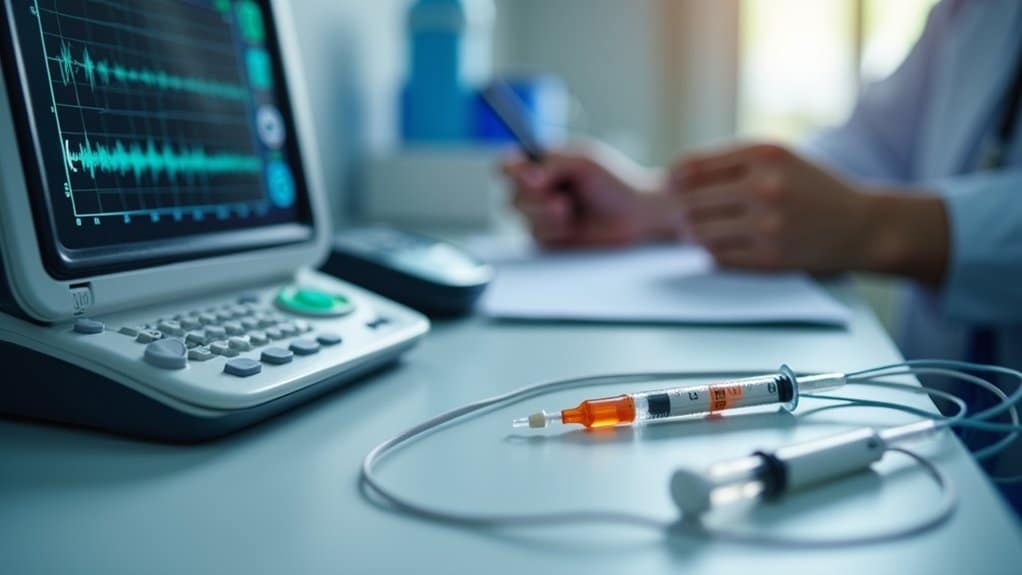
Accurate assessment of high-risk patients undergoing alcohol withdrawal requires systematic evaluation protocols and vigilant monitoring strategies. You’ll need to implement standardized risk assessment tools, including the PAWSS and CIWA-Ar scales, which offer superior predictive value for severe withdrawal complications. Monitor patients with prior withdrawal seizures or delirium tremens every 1-2 hours during the initial 24-hour period. Systolic blood pressure readings above 140 mm Hg warrant increased monitoring due to higher risk of severe withdrawal.
Your withdrawal monitoring protocol should include regular evaluation of crucial signs, electrolyte balance, and mental status. Administration of thiamine supplementation during hospitalization is essential for all patients regardless of their nutritional status. Watch for key indicators such as orientation changes, sleep disturbances, and hydration status. The imbalance between GABA and glutamate signals in the central nervous system drives the development of withdrawal symptoms. For patients in general medical settings, maintain heightened vigilance as even those with moderate risk factors can rapidly progress to severe withdrawal. Adjust monitoring frequency based on CIWA-Ar scores and individual risk factors.
Hospital-Based Treatment Approaches
Successful hospital-based treatment of alcohol withdrawal requires a detailed approach centered on benzodiazepine administration and intensive monitoring protocols. Hospital protocols emphasize symptom-triggered medication regimens using the CIWA-Ar scale, which optimizes dosing while reducing overall benzodiazepine requirements. Due to the kindling phenomenon effect, each subsequent withdrawal episode tends to be more severe, making early intervention crucial.
Critical aspects of patient monitoring include:
- Continuous neurological assessment with EEG monitoring and brain CT imaging to evaluate seizure activity
- Regular biochemistry panels to detect metabolic derangements and electrolyte imbalances
- Frequent essential sign checks and clinical stability monitoring, especially in ICU settings
You’ll receive IV fluids for hydration support while healthcare providers carefully track your response to lorazepam or diazepam administration. This extensive approach guarantees early detection of complications and allows for rapid intervention, particularly in cases where delirium tremens presents a 5-10% mortality risk.
Managing Breakthrough Seizures During Withdrawal

Managing breakthrough seizures requires immediate clinical intervention with standardized protocols to minimize neurological complications. You’ll need to implement parenteral benzodiazepines as your first-line acute intervention, which reduces seizure risk by 84% when administered promptly following the initial episode. Seizures typically emerge 12 to 48 hours after the last alcoholic drink.
Since severe AWS symptoms can lead to increased mortality of up to 20% if untreated, rapid intervention is essential. For refractory cases, you should consider phenobarbital loading at 260mg IV or 10mg/kg to achieve therapeutic serum levels of 15μg/ml. The CIWA protocol guides your benzodiazepine dosing strategy – administering diazepam 5-20mg or lorazepam 1-2mg based on withdrawal severity. Monitor patients every hour post-administration.
In complex cases, you may add adjunctive medications like gabapentin 300-600mg TID or pregabalin to enhance seizure protection while reducing benzodiazepine requirements. Maintain close observation for status epilepticus development requiring escalated interventions.
Alternative Therapeutic Options and Their Efficacy
While benzodiazepines remain the gold standard for seizure prophylaxis during alcohol withdrawal, several alternative therapeutic options demonstrate promising efficacy profiles. Carbamazepine alternatives have shown particular promise, with studies involving 612 patients demonstrating significant reduction in withdrawal symptoms through sodium channel inhibition and GABAergic modulation. Tonic-clonic seizures typically manifest within 6-48 hours after alcohol cessation, making early intervention crucial. Due to online security protocols, access to certain medical resources may be temporarily restricted during research of treatment options.
Key therapeutic alternatives include:
- Chlormethiazole, showing high efficacy for α4 subunit-containing GABA-A receptors that emerge during withdrawal
- Carbamazepine at 800mg daily doses, demonstrating comparable seizure prevention to benzodiazepines
- Valproate protocols, commonly utilized in European treatment frameworks
You’ll find regional variations in protocol preferences, particularly in European settings where chlormethiazole efficacy has established it as a first-line treatment. However, medication compliance challenges and potential drug interactions necessitate careful patient-specific selection of these alternatives.
Recovery Timeline and Long-Term Prevention
During acute alcohol withdrawal, you’ll experience a predictable progression of symptoms over 7-10 days, with peak seizure risk occurring between 12-48 hours after your last drink. You’ll need continuous medical monitoring through the critical 72-hour mark, as seizure threshold remains considerably lowered during this period. Benzodiazepine medications are typically prescribed to help prevent dangerous seizure activity during detox. Beyond the acute phase, you’ll require careful post-detox management and potential anticonvulsant therapy if you’ve experienced withdrawal seizures, especially given that neurological sensitization can persist for several months following cessation. Studies show that over five percent of individuals withdrawing from alcohol will experience at least one seizure during the detoxification process.
Acute Withdrawal Duration Patterns
Because alcohol withdrawal follows a predictable yet individually variable timeline, understanding the distinct phases becomes vital for preventing seizures and other complications. The progression of withdrawal phases typically spans 7-10 days, with symptom severity peaking between 48-72 hours post-cessation.
Key withdrawal progression markers include:
- Initial phase (0-12 hours): Manifesting anxiety, tremors, and autonomic hyperactivity
- Important phase (12-48 hours): Heightened seizure risk and potential hallucinations
- Peak severity phase (48-72 hours): Maximum symptom intensity with delirium tremens risk
You’ll notice symptom intensity varies considerably based on your alcohol consumption history and physiological factors. During the acute withdrawal period, medical monitoring becomes vital, particularly within the 12-48 hour window when seizure risk escalates dramatically. This phase requires vigilant clinical observation and appropriate pharmacological intervention.
Managing Post-Detox Seizure Risk
Your monitoring protocol should include continuous assessment of critical signs, particularly blood pressure and pulse, due to potential cardiovascular complications. You’ll want to consistently apply validated withdrawal severity instruments throughout the extended recovery period. For best seizure prevention, implement IV or IM thiamine administration at doses targeting Wernicke encephalopathy prevention. If symptoms persist beyond the anticipated timeline, you’ll need to shift to higher levels of care and integrate FDA-approved pharmacotherapies with behavioral interventions. Consider addiction specialist referral for patients experiencing prolonged or recurring symptoms.
Stopping Drinking Alone Can Be Dangerous
Quitting cold turkey can turn serious fast, and no one should take that risk by themselves. Help from people who understand keeps you safer. In Pompton Lakes, NJ, the Hope Institute supports lasting recovery through alcohol addiction treatment in New Jersey. Call (855) 659-2310 or contact us to begin.
Frequently Asked Questions
Can I Drive While Taking Seizure Prevention Medications During Alcohol Detox?
You shouldn’t drive while taking seizure prevention medications during alcohol detox. These medications can cause significant side effects including drowsiness, impaired coordination, and delayed reaction times. Strict driving restrictions apply due to the combined effects of withdrawal and anticonvulsant medications on your central nervous system. You’ll need your healthcare provider’s clearance before operating vehicles, as medication side effects can substantially compromise your driving safety.
How Do Herbal Supplements Interact With Alcohol Withdrawal Seizure Medications?
You shouldn’t take herbal supplements during alcohol withdrawal without consulting your healthcare provider due to dangerous herbal interactions with seizure medications. Supplements like St. John’s wort and Ashwagandha can interfere with anticonvulsants such as carbamazepine and benzodiazepines, potentially reducing their effectiveness. Supplement safety is critical as these combinations may alter your seizure threshold or cause unpredictable neurological effects. Always disclose any supplements you’re taking to your medical team.
What Role Does Genetics Play in Alcohol Withdrawal Seizure Risk?
Your genetic predisposition greatly influences your risk of experiencing alcohol withdrawal seizures. Research shows that if you have a family history of alcohol withdrawal complications, you’re more likely to experience seizures during detox. Specific gene variants, particularly in GABA receptor systems and neurotransmitter pathways, affect your seizure susceptibility. Your genetic profile can determine how your brain adapts to alcohol dependence and responds during withdrawal, impacting seizure threshold and severity.
Does Medical Marijuana Help Prevent Alcohol Withdrawal Seizures?
While medical marijuana shows promise for managing some alcohol withdrawal symptoms, there isn’t sufficient clinical evidence to confirm it prevents withdrawal seizures specifically. You shouldn’t rely on cannabis as your primary seizure prevention method during alcohol detox. Standard medical treatments like benzodiazepines remain the proven, first-line therapy for preventing withdrawal seizures. Always work with healthcare providers to develop a safe, medically-supervised detox plan rather than self-medicating with marijuana.
Can Exercise or Physical Activity Increase Seizure Risk During Detox?
You should approach exercise safety with extreme caution during alcohol detox, as physical activity could theoretically increase seizure risk due to altered neurotransmitter dynamics and metabolic stress. While direct research is limited, the hyperexcitable state of your central nervous system during withdrawal suggests that strenuous activity might lower your seizure threshold. It is crucial to consult your healthcare provider about appropriate physical activity levels during the acute withdrawal phase.