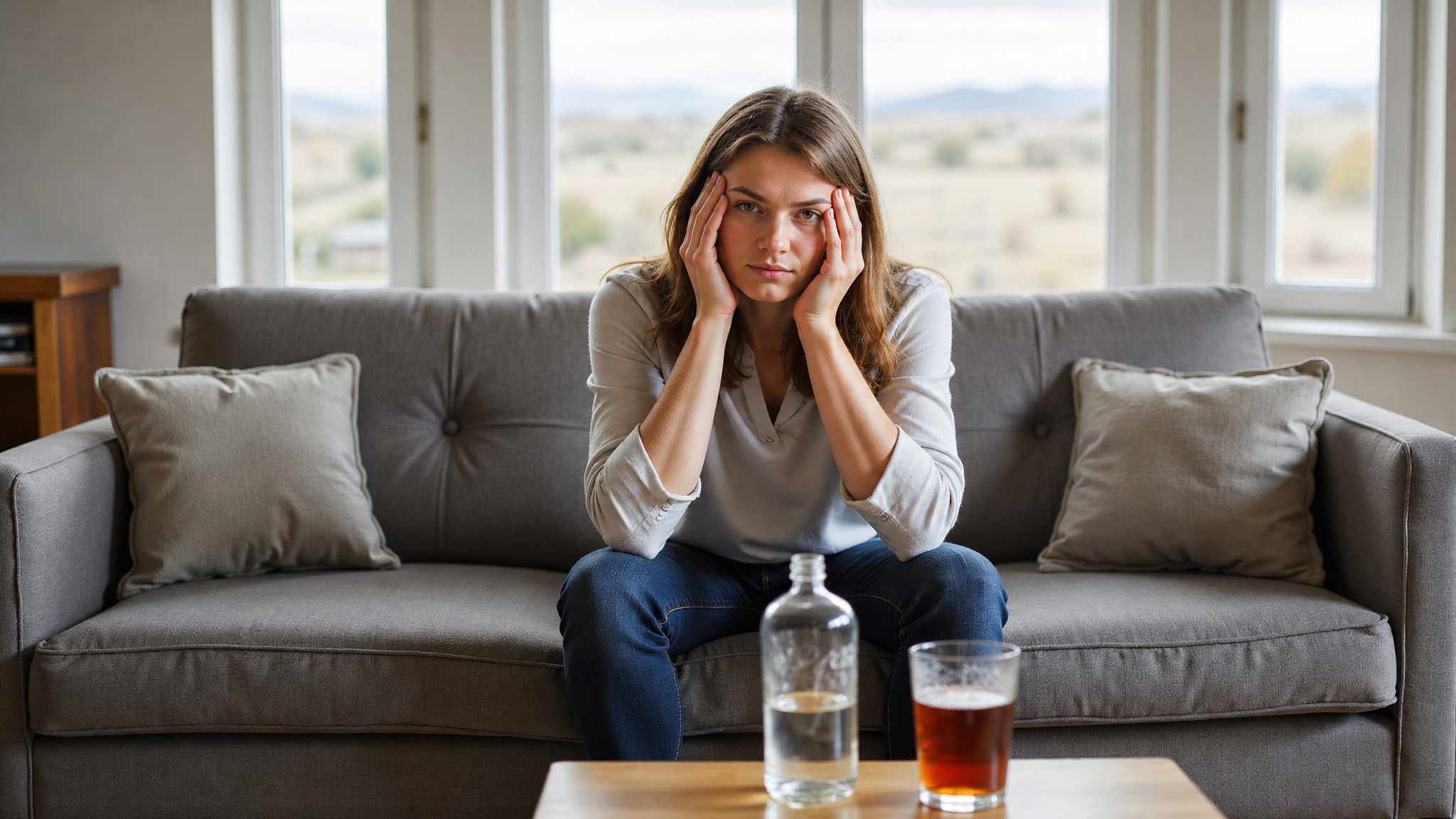
When you drink late, alcohol enhances GABA activity, slowing brain signaling and triggering fast drowsiness. But this sedation masks underlying arousal instead of producing natural sleep. As your body metabolizes the alcohol, blood alcohol levels fall, and the sedative effect weakens. This creates a biphasic pattern: early sedation followed by rebound arousal. Your REM sleep gets suppressed, then rebounds, fragmenting your night. Understanding what unfolds through each phase reveals why your rest suffers.
Key Takeaways
- Alcohol boosts GABA activity, causing quick drowsiness that masks arousal rather than producing genuine, restorative sleep.
- As blood alcohol falls, the sedative effect fades, triggering rebound arousal that makes staying asleep difficult.
- Suppressed vasopressin increases urine production, leading to bladder-driven awakenings that fragment your sleep throughout the night.
- Alcohol relaxes upper airway muscles, worsening snoring and breathing pauses that cause frequent brief arousals.
- Dilated blood vessels and disrupted temperature regulation raise skin temperature, triggering night sweats and restless awakenings.
Why Is It Hard to Sleep When Drunk

Alcohol makes sleep difficult because it enhances GABA activity, slowing brain signaling and producing early drowsiness that feels sedating but isn’t natural sleep. This sedation masks underlying arousal rather than reproducing normal sleep architecture, so your brain doesn’t cycle through stages properly. As your blood alcohol level falls, the sedative effect weakens and alcohol sleep disruption intensifies. You’ll experience suppressed REM sleep, the stage tied to memory consolidation and emotional processing, along with increased REM latency. Sleep fragmentation forces repeated returns to lighter stages, reducing efficiency. When alcohol’s fully metabolized, rebound arousal raises heart rate and cortisol, triggering a “wired but tired” state. This excitatory shift explains the insomnia that blocks your return to sleep.
What Happens to Your Sleep Cycles Through the Night
Your sleep cycles split into two distinct phases through the night when you drink late, driven by falling blood alcohol levels. Early on, alcohol enhances GABA activity, sedating you and suppressing REM sleep. As metabolism clears the alcohol, sedation weakens and your nervous system shifts toward excitation, with rising glutamate, cortisol, and heart rate.
| Phase | Blood Alcohol | Sleep Effect |
|---|---|---|
| First half | Elevated | Sedation, REM suppression |
| Transition | Falling | Fragmentation begins |
| Second half | Low/cleared | Rebound arousal, awakenings |
During the second half, REM rebounds while awakenings multiply, forcing repeated returns to lighter stages. Your sleep efficiency drops because time in bed no longer translates to sustained sleep. This biphasic pattern explains why the early morning hours feel restless and unrecoverable.
Why Does Alcohol Cause Night Sweats and Bathroom Trips
Alcohol causes night sweats and bathroom trips by disrupting your body’s fluid and temperature regulation directly. Alcohol suppresses vasopressin, the hormone that signals your kidneys to conserve water. Without adequate vasopressin, you produce more urine, which fills your bladder and forces you awake for bathroom trips. Each awakening fragments your sleep and reduces your chance of returning to deeper stages.
Alcohol also disrupts your temperature regulation. Your body normally cools during sleep, but alcohol interferes with this process, dilating blood vessels and raising skin temperature. As your metabolism processes the alcohol, you can experience night sweats and thermal discomfort that trigger restless awakenings. These physical disruptors compound with alcohol’s rebound arousal effects, making it harder for you to fall back asleep once you’re awake.
How Does Alcohol Worsen Snoring and Breathing at Night
Alcohol worsens snoring and breathing at night by relaxing the muscles of your upper airway, including the throat and tongue. As these tissues lose tone, your airway narrows, and airflow becomes turbulent. That turbulence sets the soft tissues vibrating, producing or worsening snoring.
The same muscle relaxation raises your risk of partial or complete airway collapse. If you’re prone to obstructive sleep apnea, alcohol deepens and lengthens those breathing pauses, lowering blood oxygen levels. Your brain then triggers brief arousals to restore airflow, fragmenting sleep further. The combination of alcohol and metformin interaction can also have significant effects on metabolic processes. It is essential to consult with a healthcare provider to understand the risks associated with this interaction, especially for individuals with pre-existing conditions.
Alcohol also blunts your arousal response, so you stay in these low-oxygen states longer before waking. Combined with the sedation, fragmentation, and rebound arousal already at work, compromised breathing makes returning to stable sleep harder.
Can Regular Nightcaps Turn Into Chronic Insomnia
Yes, regular nightcaps can drive you toward chronic insomnia, largely because tolerance to alcohol’s sedating effects builds quickly. As tolerance develops, you lose the initial drowsiness that once shortened your sleep onset, so you need more alcohol to feel the same effect. Meanwhile, the disruptive effects persist: fragmented sleep, suppressed REM, and rebound arousal continue regardless of tolerance. This mismatch matters. You keep drinking for sedation you no longer get, while the physiological damage to your sleep architecture accumulates. In chronic heavy use and alcohol use disorder, prolonged sleep latency and insomnia become common clinical findings. Your nervous system adapts toward an excitatory baseline, making it harder to fall and stay asleep even on nights you don’t drink, reinforcing a dependence-driven cycle.
What Helps You Sleep Better After Drinking
Timing your last drink offers the most leverage for sleeping better after drinking. Stop several hours before bed so your body metabolizes most of the alcohol before your deepest sleep, reducing rebound arousal and REM suppression. Keep doses low; heavier intake prolongs sleep latency and fragments continuity. Hydrate to offset vasopressin suppression, and empty your bladder before bed to limit nighttime awakenings. Cool your room to counter alcohol’s disruption of thermoregulation and reduce night sweats. Avoid late-night stimulants and screens that add to the “wired but tired” state as sedation fades. Don’t rely on alcohol as a sleep aid, since tolerance erodes its sedative effect and worsens insomnia over time. When you wake early, expect glutamate-driven arousal and avoid clock-watching, which heightens sympathetic activation. Spotting alcohol problems early can significantly improve overall well-being. Identifying the signs of dependency allows for timely intervention and healthier lifestyle choices.
How to Find Help if You Can’t Wind Down Without a Drink
To find help when you can’t wind down without a drink, start with a professional evaluation that identifies whether you’ve developed tolerance or an alcohol use disorder requiring structured treatment. Relying on alcohol to fall asleep signals a dependence pattern that behavioral strategies alone won’t resolve. Your nervous system has likely adapted to alcohol’s GABA-enhancing effects, and abrupt cessation can trigger rebound arousal, insomnia, and heightened sympathetic activity. What happens after a month without alcohol can vary significantly between individuals. Many people experience improved sleep patterns, better mood stability, and increased energy levels.
- A primary care physician reviewing your intake patterns and sleep history
- A sleep specialist ordering polysomnography to assess fragmented architecture
- A cognitive behavioral therapist delivering CBT-I to rebuild sleep-onset associations
- An addiction medicine clinician monitoring supervised withdrawal and cravings
- A support group meeting where peers share relapse-prevention strategies
Seek help early, before dependence deepens and sleep disruption worsens.
Conclusion
Although alcohol can make you feel drowsy at first, it badly disrupts the sleep that follows, which is why falling and staying asleep after a late night of drinking is so hard. Alcohol interferes with deep and REM sleep, spikes nighttime wakefulness, and leaves you restless as it wears off. Cutting back, hydrating, and giving your body time before bed can help, but ongoing sleep struggles tied to drinking are worth taking seriously. If alcohol is disrupting your sleep and your life, The Hope Institute in West Milford, NJ offers compassionate support to help you rest and recover.
You Don’t Have to Face Sobriety Alone
Quitting drinking can feel terrifying, especially when your body and mind have relied on alcohol for so long, but you were never meant to do this by yourself. At The Hope Institute in Bloomingdale, NJ, our caring team offers compassionate outpatient Alcohol Addiction Treatment with medical safety, warmth, and steady understanding. Call +1 (855) 659-2310 today and let us walk with you into a healthier tomorrow.
Frequently Asked Questions
Does the Type of Alcohol Affect Sleep Quality Differently?
The type matters less than the total ethanol dose you consume. Your body processes ethanol identically regardless of source, so it’s the amount and timing that drive REM suppression, sleep fragmentation, and rebound arousal. Higher-proof drinks can raise your blood alcohol faster, but a matched ethanol dose produces comparable effects. Congeners in darker spirits may worsen next-day symptoms, yet they don’t meaningfully alter your core sleep architecture disruption.
How Long Before Bed Should I Stop Drinking?
You should stop drinking at least 3-4 hours before bed, allowing your body time to metabolize the alcohol before your deepest sleep. Since drinking late leaves less time for blood alcohol levels to fall, you’ll experience stronger rebound arousal during early-morning hours. Heavier intake requires more clearance time. Finishing earlier reduces sleep fragmentation, REM suppression, and nighttime awakenings, so you’ll maintain better sleep continuity and wake feeling more restored.
Can Coffee the Next Morning Fix Alcohol-Related Sleep Loss?
No, coffee can’t fix alcohol-related sleep loss. Caffeine masks sleepiness by blocking adenosine receptors, but it doesn’t restore the REM sleep or deep sleep stages your alcohol intake suppressed. You’ll feel more alert temporarily, yet your sleep debt and disrupted sleep architecture remain unaddressed. Caffeine also has a long half-life, so drinking it too late can impair tonight’s sleep onset, compounding the problem rather than resolving it.
Do Women and Men Experience Alcohol’s Sleep Effects Differently?
Yes, you’ll likely experience alcohol’s sleep effects differently based on sex. If you’re a woman, you typically metabolize alcohol more slowly due to lower body water content and reduced alcohol dehydrogenase activity, so you’ll reach higher blood alcohol concentrations per drink. That means you’ll often face more pronounced sleep fragmentation, REM suppression, and rebound arousal. Hormonal fluctuations across your cycle can further amplify these disruptions, worsening overall sleep quality.
Does Age Change How Alcohol Disrupts Your Sleep?
Yes, age amplifies alcohol’s sleep disruption. As you get older, your sleep architecture naturally shifts toward lighter stages, so you’re already more vulnerable to fragmentation. Alcohol compounds this by increasing nighttime awakenings and suppressing REM. Your metabolism also slows, keeping blood alcohol elevated longer and prolonging rebound arousal. Age-related declines in vasopressin regulation mean you’ll wake more for bathroom trips, further reducing your sleep efficiency and restorative deep sleep.