Smoking meth doesn’t directly swell the lymph nodes in your neck. But it sets the stage for problems that do. Meth irritates your mouth and throat, worsens oral hygiene, and causes dehydration and poor self-care. It also triggers systemic inflammation that weakens your immune system. This raises your risk of dental abscesses, throat infections, and viral illnesses, the usual triggers for swollen nodes. Understanding these indirect pathways can help you recognize when swelling signals something serious.
Key Takeaways
- Smoking meth is not a proven direct cause of swollen neck lymph nodes, which usually stem from infection, inflammation, or cancer.
- Meth smoke irritates the mouth and throat, damaging protective barriers and raising the risk of infections that inflame lymph nodes.
- Poor oral hygiene, dehydration, and neglected self-care during meth use often lead to dental abscesses and throat infections.
- Meth triggers systemic inflammation and weakens immune regulation, increasing vulnerability to viral, bacterial, and opportunistic infections like tuberculosis.
- Seek medical care if swelling lasts beyond two weeks, feels hard or fixed, or comes with fever, night sweats, or weight loss.
Can Smoking Meth Cause Swollen Lymph Nodes

Smoking meth isn’t established as a direct cause of swollen lymph nodes in your neck. Published medical references attribute cervical lymphadenopathy primarily to infection, inflammation, cancer, and certain medications, not meth smoke itself. What limited substance-use literature exists ties lymph-node changes mainly to injection drug use or systemic inflammation, not smoking alone.
That said, meth smoking can contribute indirectly. Smoke irritates your mouth and throat, and meth use often worsens oral hygiene, dehydration, and self-care, all of which raise your infection risk. Since infection remains the most common trigger for swollen neck nodes, that’s the more plausible pathway. So while the direct link isn’t proven, the indirect contributions are biologically reasonable and worth understanding.
How Does Meth Weaken the Immune System
Meth weakens your immune system by triggering systemic inflammation, which can disturb normal immune regulation and leave you more vulnerable to infection. This helps explain why infections, the most common cause of swollen neck nodes, become more likely with use. Beyond these direct immune effects, meth often reduces self-care, disrupts sleep, and causes dehydration, all of which further weaken your body’s defenses. Smoking meth also irritates your mouth and throat, damaging mucosal barriers that normally block pathogens. Poor oral hygiene compounds the problem, raising your risk of dental and throat infections. When your immune system’s compromised this way, your lymph nodes work harder, sometimes swelling as they respond. This pathway is biologically plausible but not conclusively proven for smoking alone. Meth effects on the brain can lead to alterations in mood and cognitive function, exacerbating feelings of anxiety and depression. These changes can further diminish one’s capacity to make healthy decisions, perpetuating a cycle of substance use.
Which Infections From Use Inflame the Lymph Nodes

Infections that inflame the lymph nodes from meth use include dental abscesses, throat and upper respiratory infections, and tuberculosis, most of which start where smoke does the most damage: your mouth and throat. When you smoke meth, you irritate mucosal tissue and often neglect oral hygiene, which raises your risk of dental and throat infections. These local infections commonly trigger reactive lymph node swelling in your neck. Meth-related hair loss can also occur as a consequence of prolonged substance abuse. This condition may arise due to the nutritional deficiencies and stress experienced by individuals on meth.
| Infection Type | Common Source | Node Response |
|---|---|---|
| Dental abscess | Poor oral hygiene | Tender, reactive |
| Throat/URI | Mucosal irritation | Soft, mobile |
| Tuberculosis | Immunocompromise | Firm, persistent |
Viral upper respiratory infections remain the most frequent cause. Bacterial dental infections follow closely when decay goes untreated. If you’re immunocompromised, tuberculous lymphadenitis becomes a serious consideration requiring prompt evaluation.
Could It Signal HIV, Hepatitis, or Another Serious Illness
Yes, persistent neck swelling can signal HIV, hepatitis, or another serious illness. HIV, hepatitis, and other systemic illnesses belong on that list of possible causes. If you use meth, your risk of these conditions may rise through shared equipment, unprotected sex, or compromised immune function. Swollen cervical nodes alone don’t confirm any diagnosis, but they can be an early clue worth investigating. Tuberculous lymphadenitis and malignancy also deserve consideration when swelling lingers or nodes feel hard and fixed.
Persistent neck swelling can signal HIV, hepatitis, or other serious illness, swollen nodes are an early clue worth investigating.
- HIV can cause generalized lymphadenopathy, sometimes appearing weeks after exposure.
- Hepatitis and chronic infections may trigger systemic immune activation and node enlargement.
- Tuberculosis and cancer remain serious possibilities when swelling persists beyond two weeks.
Testing and medical evaluation clarify what’s actually happening.
When Should Swollen Nodes Send You to a Doctor
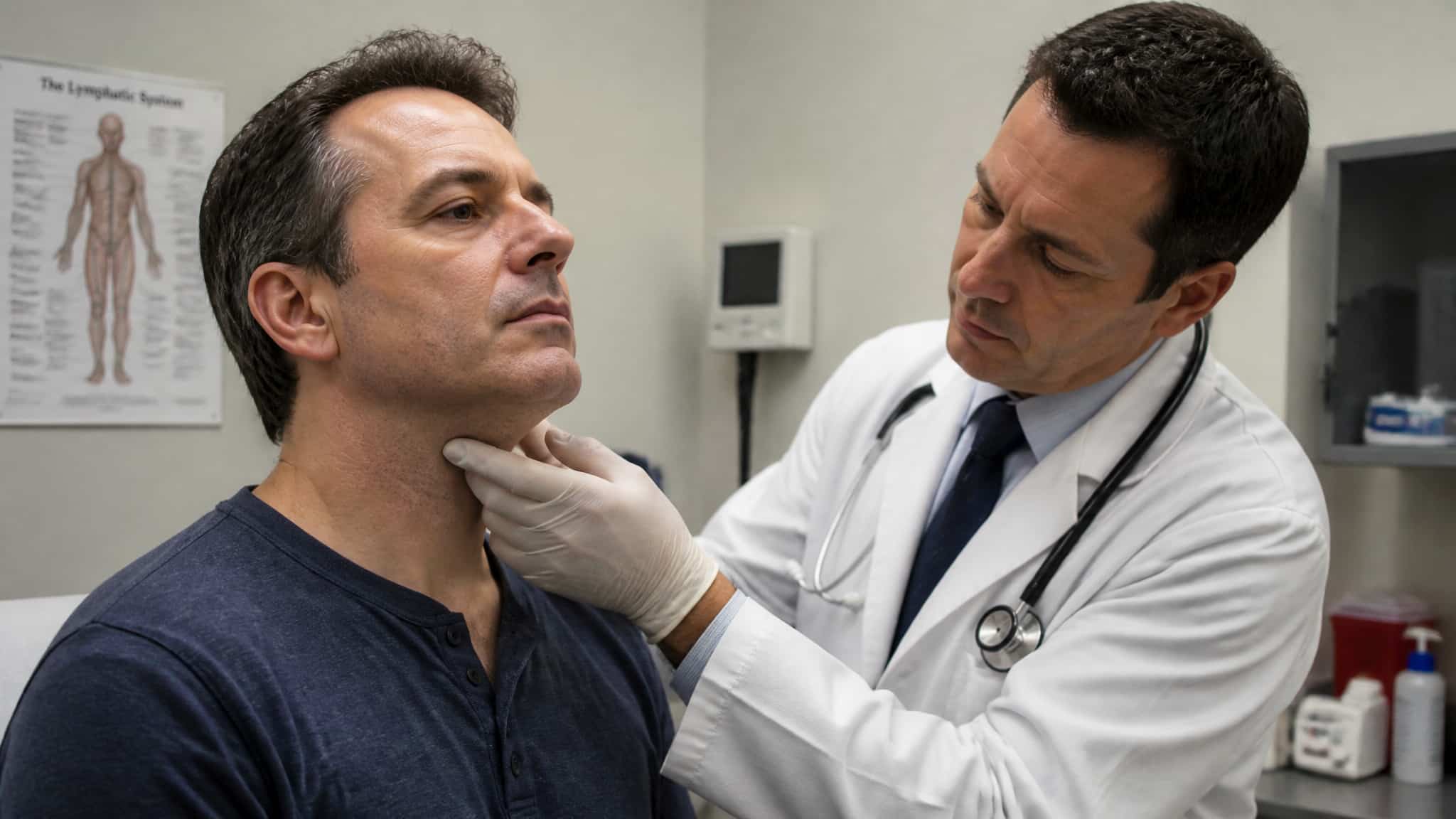
Swollen nodes warrant a doctor’s visit based on their timing and characteristics. If swelling lasts longer than two weeks or keeps growing, you should get it evaluated. Pay attention to how the nodes feel: tender, soft, mobile nodes usually point to infection, while hard, rubbery, irregular, or fixed nodes need prompt review.
Certain symptoms raise the concern level. See a doctor if swelling comes with night sweats, unexplained weight loss, or persistent fever. Difficulty swallowing, breathing problems, or a lingering sore throat also call for urgent assessment.
If you’re using meth, don’t assume the swelling stems from the drug alone. Any neck mass deserves evaluation for infection, dental disease, tuberculosis, and malignancy, common and serious causes alike. Swollen feet from meth use can also be a sign of fluid retention, which may complicate other health issues. It’s crucial to monitor any changes in your body and communicate them to a healthcare provider.
Does the Swelling Settle After Quitting
Swelling may or may not settle after you quit, depending on what’s causing it. If irritation from smoke or a minor reactive response drove the swelling, you’ll likely see it improve once you stop exposing your mouth and throat to irritants. But if an underlying infection, dental disease, or another condition is responsible, quitting alone won’t resolve it. You’ll need targeted treatment.
- Reactive swelling from irritation often eases within weeks once the trigger’s gone.
- Infection-driven nodes need appropriate treatment, not just cessation, to settle.
- Persistent or growing nodes after quitting signal a cause that requires evaluation.
Quitting supports better oral health, hydration, and immune function, which can reduce infection risk. Still, don’t assume improvement. Track your nodes and seek assessment if they persist.
Conclusion
Smoking meth can take a serious toll on the body, and swollen lymph nodes in the neck can be one sign that the immune system is under strain from infection, inflammation, or the drug’s harsh effects. While swollen nodes have many possible causes and should be checked by a doctor, their appearance alongside meth use is a signal worth taking seriously. The good news is that the body can begin to heal once the drug is out of the picture. If meth use is affecting your health or a loved one’s, The Hope Institute in West Milford, NJ offers compassionate treatment to help you reclaim your wellbeing.
Reclaim Your Health From Meth Addiction
Meth takes a serious toll on your body, but professional care can help you heal both physically and mentally. At The Hope Institute in Newfoundland, NJ, our caring team offers compassionate outpatient Meth Addiction Treatment with warmth, patience, and a real belief in your recovery. Call +1 (855) 659-2310 today and let us walk with you toward brighter days.
Frequently Asked Questions
Can Smoking Meth Cause Swelling in Other Lymph Node Areas?
There’s no strong evidence that smoking meth directly swells lymph nodes in other areas, like your armpits or groin. If you notice swelling elsewhere, it’s more likely from infection, inflammation, or another underlying condition. Meth use can indirectly raise your infection risk, which might trigger reactive nodes anywhere. If swelling persists beyond two weeks or comes with fever, weight loss, or night sweats, you’ll want to get it evaluated.
How Long After Smoking Meth Might Lymph Nodes Swell?
There’s no established timeline, because smoking meth isn’t a proven direct cause of swollen lymph nodes. If swelling follows an infection, like a dental, throat, or respiratory issue that meth use can worsen, you’d typically notice reactive nodes within a few days of symptoms starting. If you’ve got swelling lasting more than two weeks, or hard, fixed nodes with fever, weight loss, or night sweats, get evaluated promptly.
Are Swollen Nodes From Meth Painful or Painless?
It depends on the underlying cause. If an infection’s driving the swelling, your nodes are usually tender, soft, and mobile, so you’ll likely feel pain. Painless, hard, or fixed nodes raise more concern and warrant prompt evaluation for serious causes like malignancy or tuberculosis. Since meth isn’t an established direct cause, you shouldn’t assume it’s the reason. Get any node lasting longer than two weeks checked by a clinician.
Can Dehydration From Meth Use Mimic Swollen Lymph Nodes?
Not exactly. Dehydration itself doesn’t create swollen lymph nodes, but it can affect how your neck feels and looks. When you’re dehydrated, your salivary glands may become inflamed or your tissues may feel different, which you might mistake for enlarged nodes. Meth use often worsens dehydration through reduced fluid intake and increased activity. If you feel a neck lump, get it evaluated rather than assuming it’s just dehydration.
Does the Way Meth Is Smoked Affect Node Swelling?
There’s no direct evidence that how you smoke meth affects node swelling specifically. What matters more is the indirect irritation from smoke exposure. When you inhale, you’re irritating your mouth and throat, which can worsen oral hygiene and increase infection risk, and infections are what typically trigger swollen neck nodes. So the smoking method itself isn’t well-studied, but heavier or more frequent exposure could raise your infection risk and reactive swelling.